
Available options are listed below:
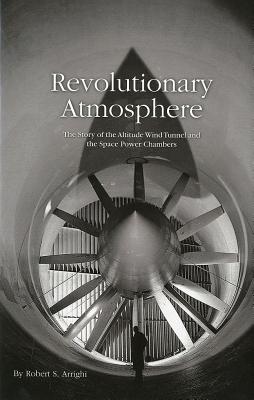
Revolutionary Atmosphere: The Story of the Altitude Wind Tunnel and the Space Power Chambers (Out of print)
| PUBLISHER | Government Printing Office (07/13/2010) |
| PRODUCT TYPE | Hardcover (Hardcover) |
NOTE: NO FURTHER DISCOUNT FOR THIS PRINT PRODUCT--OVERSTOCK SALE-- Significantly reduced list price
A massive, but little-known, facility in Cleveland, Ohio, played a vital role in the U.S. development of jets, in the training of NASA s first astronauts, and in making NASA s first missions beyond Earth orbit possible. Revolutionary Atmosphere tells the story of this obscure giant. Starting life in 1944 as the Altitude Wind Tunnel, it was the first wind tunnel that could study aircraft engines under realistic flight conditions; and it was enormous in its original configuration, it could even accommodate full-size aircraft. The tunnel could not only simulate the high speeds of jet aircraft, like other wind tunnels, but could simulate the pressures and temperatures of higher elevation flight. Creating the frigid temperatures required the world s largest refrigeration system, which the Carrier Corporation designed with innovative accordion-like cooling coils. At the military s request, nearly every type of aircraft engine was tested in the Altitude Wind Tunnel during the 1940s and 1950s. In the late 1950s, when the flight of Sputnik I spurred the National Advisory Committee for Aeronautics (NACA) to become the National Aeronautics and Space Administration (NASA) and change its primary mission to aerospace, the facility changed too.
Other products produced by NASA can be found here: https: //bookstore.gpo.gov/agency/550"
NOTE: NO FURTHER DISCOUNT FOR THIS PRINT PRODUCT--OVERSTOCK SALE-- Significantly reduced list price
A massive, but little-known, facility in Cleveland, Ohio, played a vital role in the U.S. development of jets, in the training of NASA s first astronauts, and in making NASA s first missions beyond Earth orbit possible. Revolutionary Atmosphere tells the story of this obscure giant. Starting life in 1944 as the Altitude Wind Tunnel, it was the first wind tunnel that could study aircraft engines under realistic flight conditions; and it was enormous in its original configuration, it could even accommodate full-size aircraft. The tunnel could not only simulate the high speeds of jet aircraft, like other wind tunnels, but could simulate the pressures and temperatures of higher elevation flight. Creating the frigid temperatures required the world s largest refrigeration system, which the Carrier Corporation designed with innovative accordion-like cooling coils. At the military s request, nearly every type of aircraft engine was tested in the Altitude Wind Tunnel during the 1940s and 1950s. In the late 1950s, when the flight of Sputnik I spurred the National Advisory Committee for Aeronautics (NACA) to become the National Aeronautics and Space Administration (NASA) and change its primary mission to aerospace, the facility changed too.
Other products produced by NASA can be found here: https: //bookstore.gpo.gov/agency/550"