
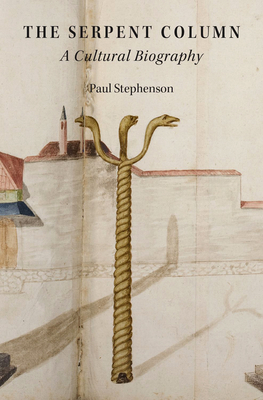
Serpent Column: A Cultural Biography
| AUTHOR | Stephenson, Paul |
| PUBLISHER | Oxford Univ PR (08/01/2016) |
| PRODUCT TYPE | Hardcover (Hardcover) |
Description
The Serpent Column, a bronze sculpture that has stood in Delphi and Constantinople, today Istanbul, is a Greek representation of the Near Eastern primordial combat myth: it is Typhon, a dragon defeated by Zeus, and also Python slain by Apollo. The column was created after the Battle of Plataia (479 BC), where the sky was dominated by serpentine constellations and by the spiralling tails of the Milky Way. It was erected as a votive for Apollo and as a monument to the victory of the united Greek poleis over the Persians. It is as a victory monument that the column was transplanted to Constantinople and erected in the hippodrome. The column remained a monument to cosmic victory through centuries, but also took on other meanings. Through the Byzantine centuries these interpretation were fundamentally Christian, drawing upon serpentine imagery in Scripture, patristic and homiletic writings. When Byzantines saw the monument they reflected upon this multivalent serpentine symbolism, but also the fact that it was a bronze column. For these observers, it evoked the Temple's brazen pillars, Moses' brazen serpent, the serpentine tempter of Genesis (Satan), and the beast of Revelation. The column was inserted into Christian sacred history, symbolizing creation and the end times. The most enduring interpretation of the column, which is unrelated to religion, and therefore survived the Ottoman capture of the city, is as a talisman against snakes and snake-bites. It is this tale that was told by travellers to Constantinople throughout the Middle Ages, and it is this story that is told to tourists today who visit Istanbul. In this book, Paul Stephenson twists together multiple strands to relate the cultural biography of a unique monument.
Show More
Product Format
Product Details
ISBN-13:
9780190209063
ISBN-10:
0190209062
Binding:
Hardback or Cased Book (Sewn)
Content Language:
English
More Product Details
Page Count:
304
Carton Quantity:
24
Product Dimensions:
5.40 x 1.20 x 8.40 inches
Weight:
1.40 pound(s)
Feature Codes:
Bibliography,
Index,
Maps,
Illustrated
Country of Origin:
US
Subject Information
BISAC Categories
History | Ancient - Greece
History | History - Ancient & Classical
History | Sculpture & Installation
Dewey Decimal:
938.3
Library of Congress Control Number:
2015043340
Descriptions, Reviews, Etc.
publisher marketing
The Serpent Column, a bronze sculpture that has stood in Delphi and Constantinople, today Istanbul, is a Greek representation of the Near Eastern primordial combat myth: it is Typhon, a dragon defeated by Zeus, and also Python slain by Apollo. The column was created after the Battle of Plataia (479 BC), where the sky was dominated by serpentine constellations and by the spiralling tails of the Milky Way. It was erected as a votive for Apollo and as a monument to the victory of the united Greek poleis over the Persians. It is as a victory monument that the column was transplanted to Constantinople and erected in the hippodrome. The column remained a monument to cosmic victory through centuries, but also took on other meanings. Through the Byzantine centuries these interpretation were fundamentally Christian, drawing upon serpentine imagery in Scripture, patristic and homiletic writings. When Byzantines saw the monument they reflected upon this multivalent serpentine symbolism, but also the fact that it was a bronze column. For these observers, it evoked the Temple's brazen pillars, Moses' brazen serpent, the serpentine tempter of Genesis (Satan), and the beast of Revelation. The column was inserted into Christian sacred history, symbolizing creation and the end times. The most enduring interpretation of the column, which is unrelated to religion, and therefore survived the Ottoman capture of the city, is as a talisman against snakes and snake-bites. It is this tale that was told by travellers to Constantinople throughout the Middle Ages, and it is this story that is told to tourists today who visit Istanbul. In this book, Paul Stephenson twists together multiple strands to relate the cultural biography of a unique monument.
Show More
Author:
Stephenson, Paul
Paul Stephenson is a professor of history at Durham University and a specialist in the early and middle Byzantine periods. His publications include The Legend of Basil the Bulgar-slayer and Byzantium s Balkan Frontier: A Political Study of the Northern Balkans, 900 1204. Stephenson has researched and taught in the UK, Germany, and the USA.
Show More
List Price $135.00
Your Price
$133.65