
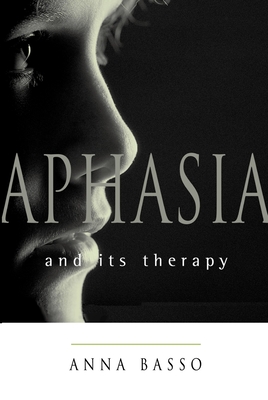
Aphasia and Its Therapy
| AUTHOR | Basso; Basso, Anna |
| PUBLISHER | Oxford University Press, USA (01/09/2003) |
| PRODUCT TYPE | Hardcover (Hardcover) |
Description
This is the first single-authored book to attempt to bridge the gap between aphasia research and the rehabilitation of patients with this language disorder. Studies of the deficits underlying aphasia and the practice of aphasia rehabilitation have often diverged, and the relationship between theory and practice in aphasiology is loose. The goal of this book is to help close this gap by making explicit the relationship between what is to be rehabilitated and how to rehabilitate it.
Early chapters cover the history of aphasia and its therapy from Broca's discoveries to the 1970s, and provide a description of the classic aphasia syndromes. The middle section describes the contribution of cognitive neuropsychology and the treatment models it has inspired. It includes discussion of the relationship between the treatment approach and the functional model upon which it is based. The final chapters deal with aphasia therapy. After providing a sketch of a working theory of aphasia, Basso describes intervention procedures for disorders resulting from damage at the lexical and sentence levels as well as a more general conversation-based intervention for severe aphasics.
Anna Basso has run an aphasia rehabilitation unit for more than thirty years. In this book she draws on her considerable experience to provide researchers, clinicians, and their students and trainees in speech-language pathology and therapy, aphasiology, and neuropsychology with comprehensive coverage of the evolution and state of the art of aphasia research and therapy.
Early chapters cover the history of aphasia and its therapy from Broca's discoveries to the 1970s, and provide a description of the classic aphasia syndromes. The middle section describes the contribution of cognitive neuropsychology and the treatment models it has inspired. It includes discussion of the relationship between the treatment approach and the functional model upon which it is based. The final chapters deal with aphasia therapy. After providing a sketch of a working theory of aphasia, Basso describes intervention procedures for disorders resulting from damage at the lexical and sentence levels as well as a more general conversation-based intervention for severe aphasics.
Anna Basso has run an aphasia rehabilitation unit for more than thirty years. In this book she draws on her considerable experience to provide researchers, clinicians, and their students and trainees in speech-language pathology and therapy, aphasiology, and neuropsychology with comprehensive coverage of the evolution and state of the art of aphasia research and therapy.
Show More
Product Format
Product Details
ISBN-13:
9780195135879
ISBN-10:
0195135873
Binding:
Hardback or Cased Book (Sewn)
Content Language:
English
More Product Details
Page Count:
336
Carton Quantity:
22
Product Dimensions:
6.42 x 0.95 x 9.52 inches
Weight:
1.54 pound(s)
Feature Codes:
Bibliography,
Index,
Illustrated
Country of Origin:
JP
Subject Information
BISAC Categories
Medical | Mental Health
Medical | Neuropsychology
Medical | Audiology & Speech Pathology
Dewey Decimal:
616.855
Library of Congress Control Number:
2002025037
Descriptions, Reviews, Etc.
publisher marketing
This is the first single-authored book to attempt to bridge the gap between aphasia research and the rehabilitation of patients with this language disorder. Studies of the deficits underlying aphasia and the practice of aphasia rehabilitation have often diverged, and the relationship between theory and practice in aphasiology is loose. The goal of this book is to help close this gap by making explicit the relationship between what is to be rehabilitated and how to rehabilitate it.
Early chapters cover the history of aphasia and its therapy from Broca's discoveries to the 1970s, and provide a description of the classic aphasia syndromes. The middle section describes the contribution of cognitive neuropsychology and the treatment models it has inspired. It includes discussion of the relationship between the treatment approach and the functional model upon which it is based. The final chapters deal with aphasia therapy. After providing a sketch of a working theory of aphasia, Basso describes intervention procedures for disorders resulting from damage at the lexical and sentence levels as well as a more general conversation-based intervention for severe aphasics.
Anna Basso has run an aphasia rehabilitation unit for more than thirty years. In this book she draws on her considerable experience to provide researchers, clinicians, and their students and trainees in speech-language pathology and therapy, aphasiology, and neuropsychology with comprehensive coverage of the evolution and state of the art of aphasia research and therapy.
Early chapters cover the history of aphasia and its therapy from Broca's discoveries to the 1970s, and provide a description of the classic aphasia syndromes. The middle section describes the contribution of cognitive neuropsychology and the treatment models it has inspired. It includes discussion of the relationship between the treatment approach and the functional model upon which it is based. The final chapters deal with aphasia therapy. After providing a sketch of a working theory of aphasia, Basso describes intervention procedures for disorders resulting from damage at the lexical and sentence levels as well as a more general conversation-based intervention for severe aphasics.
Anna Basso has run an aphasia rehabilitation unit for more than thirty years. In this book she draws on her considerable experience to provide researchers, clinicians, and their students and trainees in speech-language pathology and therapy, aphasiology, and neuropsychology with comprehensive coverage of the evolution and state of the art of aphasia research and therapy.
Show More
List Price $90.00
Your Price
$89.10