
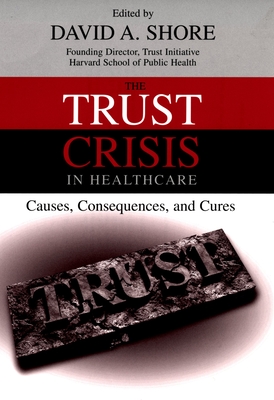
The Trust Crisis in Healthcare: Causes, Consequences, and Cures
| PUBLISHER | Oxford University Press (09/14/2006) |
| PRODUCT TYPE | Hardcover (Hardcover) |
Description
The lack of trust in our healthcare system brings ominous results, from decreasing health outcomes to increasing costs, from organization inefficiencies to a pervasive pattern of litigation. This will only worsen as healthcare becomes subject to greater market mechanisms, and as patients, providers, and payers view each other with increasing suspicion. Healthcare professionals are just now coming to realize what other professionals have known for years: trust is earned, not assumed. The Trust Crisis represents the first comprehensive survey of the causes and consequences of declining trust in healthcare, and more importantly, it provides suggestions for restoring that trust. Editor David A. Shore, founder of the Harvard School of Public Health's Trust Initiative, brings together an unparalleled collection of healthcare leaders for this volume. Chapter authors include Donald Berwick, Robert Blendon, Lucian Leape, and George Lundberg. The book also features an introduction by Cokie and Steve Roberts. Causes, consequences, and cures for the crisis in trust are specifically addressed. Critical areas treated by the authors include:
- systemic conditions that lead to medical errors, and remedies for promoting quality of care.
- outdated modes of doctor-patient communication that hinder compliance.
- novel modes of interaction to improve satisfaction. - patient-centered care and metrics to evaluate its presence or absence.
- media communication and miscommunication, and new standards for medical reporting.
- clinical insights applied to the use of human subjects in biomedical research.
- recommendations for revising medical school curricula and strengthening the peer-review process in medical journals.
- practical strategies for decreasing the lingering discord between patients, providers, and health plans. While presenting a diversity of topics and opinions, the authors of this volume agree upon a few principles. The trust famine will have dire consequences if it continues unchecked. Healthcare leaders can take measures to improve trust. Regaining trust requires that entire organizations pay closer attention to the "human factors" of healthcare. And perhaps most critical for change, trust-building is not only good medicine, but good business as well.
- systemic conditions that lead to medical errors, and remedies for promoting quality of care.
- outdated modes of doctor-patient communication that hinder compliance.
- novel modes of interaction to improve satisfaction. - patient-centered care and metrics to evaluate its presence or absence.
- media communication and miscommunication, and new standards for medical reporting.
- clinical insights applied to the use of human subjects in biomedical research.
- recommendations for revising medical school curricula and strengthening the peer-review process in medical journals.
- practical strategies for decreasing the lingering discord between patients, providers, and health plans. While presenting a diversity of topics and opinions, the authors of this volume agree upon a few principles. The trust famine will have dire consequences if it continues unchecked. Healthcare leaders can take measures to improve trust. Regaining trust requires that entire organizations pay closer attention to the "human factors" of healthcare. And perhaps most critical for change, trust-building is not only good medicine, but good business as well.
Show More
Product Format
Product Details
ISBN-13:
9780195176360
ISBN-10:
0195176367
Binding:
Hardback or Cased Book (Unsewn / Adhesive Bound)
Content Language:
English
More Product Details
Page Count:
240
Carton Quantity:
26
Product Dimensions:
6.51 x 0.73 x 9.30 inches
Weight:
1.19 pound(s)
Feature Codes:
Index,
Dust Cover,
Table of Contents,
Illustrated
Country of Origin:
GB
Subject Information
BISAC Categories
Medical | Health Care Delivery
Medical | Public Health
Dewey Decimal:
362.109
Library of Congress Control Number:
2005037264
Descriptions, Reviews, Etc.
publisher marketing
The lack of trust in our healthcare system brings ominous results, from decreasing health outcomes to increasing costs, from organization inefficiencies to a pervasive pattern of litigation. This will only worsen as healthcare becomes subject to greater market mechanisms, and as patients, providers, and payers view each other with increasing suspicion. Healthcare professionals are just now coming to realize what other professionals have known for years: trust is earned, not assumed. The Trust Crisis represents the first comprehensive survey of the causes and consequences of declining trust in healthcare, and more importantly, it provides suggestions for restoring that trust. Editor David A. Shore, founder of the Harvard School of Public Health's Trust Initiative, brings together an unparalleled collection of healthcare leaders for this volume. Chapter authors include Donald Berwick, Robert Blendon, Lucian Leape, and George Lundberg. The book also features an introduction by Cokie and Steve Roberts. Causes, consequences, and cures for the crisis in trust are specifically addressed. Critical areas treated by the authors include:
- systemic conditions that lead to medical errors, and remedies for promoting quality of care.
- outdated modes of doctor-patient communication that hinder compliance.
- novel modes of interaction to improve satisfaction. - patient-centered care and metrics to evaluate its presence or absence.
- media communication and miscommunication, and new standards for medical reporting.
- clinical insights applied to the use of human subjects in biomedical research.
- recommendations for revising medical school curricula and strengthening the peer-review process in medical journals.
- practical strategies for decreasing the lingering discord between patients, providers, and health plans. While presenting a diversity of topics and opinions, the authors of this volume agree upon a few principles. The trust famine will have dire consequences if it continues unchecked. Healthcare leaders can take measures to improve trust. Regaining trust requires that entire organizations pay closer attention to the "human factors" of healthcare. And perhaps most critical for change, trust-building is not only good medicine, but good business as well.
- systemic conditions that lead to medical errors, and remedies for promoting quality of care.
- outdated modes of doctor-patient communication that hinder compliance.
- novel modes of interaction to improve satisfaction. - patient-centered care and metrics to evaluate its presence or absence.
- media communication and miscommunication, and new standards for medical reporting.
- clinical insights applied to the use of human subjects in biomedical research.
- recommendations for revising medical school curricula and strengthening the peer-review process in medical journals.
- practical strategies for decreasing the lingering discord between patients, providers, and health plans. While presenting a diversity of topics and opinions, the authors of this volume agree upon a few principles. The trust famine will have dire consequences if it continues unchecked. Healthcare leaders can take measures to improve trust. Regaining trust requires that entire organizations pay closer attention to the "human factors" of healthcare. And perhaps most critical for change, trust-building is not only good medicine, but good business as well.
Show More
List Price $72.00
Your Price
$71.28