
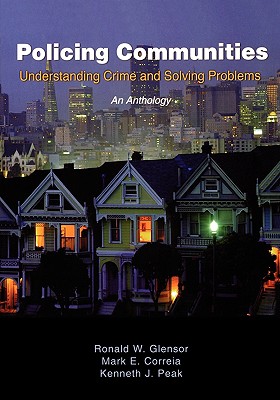
Policing Communities: Understanding Crime and Solving Problems: An Anthology
| AUTHOR | Correia, Mark E.; Glensor, Ronald W.; Glensor, Ronald W. et al. |
| PUBLISHER | Oxford University Press (11/01/1999) |
| PRODUCT TYPE | Paperback (Paperback) |
Description
This anthology introduces students to the dynamic, rapidly changing field of Community-Oriented Policing and Problem Solving (COPPS). The context of community crime and its causes are brought to the forefront in this collection of articles by leading academics and practitioners. Coverage includes such diverse topics as: * The evolution of policing.
* The role of citizens in social control, crime prevention, and prevention strategies.
* What police officers need to know about crime.
* The major changes required for organizations to successfully implement community policing.
* The role of the community as well as public and private agencies in the movement toward COPPS.
* Criminological factors which contribute to crime and disorder in our communities.
* Articles on mobilizing communities.
* Future trends in community policing. Despite the widespread implementation of community-oriented policing, its success has varied significantly from locale to locale. Policing Communities emphasizes (1) the role that the community plays in developing effective strategies for controlling and preventing crime, (2) new methods the police are using to examine the context of crime, and (3) procedures that agencies are using to implement COPPS. Brief, thought-provoking introductions are provided for each article, framing the piece in a larger context. These introductions serve as a useful "road map" for students.
* The role of citizens in social control, crime prevention, and prevention strategies.
* What police officers need to know about crime.
* The major changes required for organizations to successfully implement community policing.
* The role of the community as well as public and private agencies in the movement toward COPPS.
* Criminological factors which contribute to crime and disorder in our communities.
* Articles on mobilizing communities.
* Future trends in community policing. Despite the widespread implementation of community-oriented policing, its success has varied significantly from locale to locale. Policing Communities emphasizes (1) the role that the community plays in developing effective strategies for controlling and preventing crime, (2) new methods the police are using to examine the context of crime, and (3) procedures that agencies are using to implement COPPS. Brief, thought-provoking introductions are provided for each article, framing the piece in a larger context. These introductions serve as a useful "road map" for students.
Show More
Product Format
Product Details
ISBN-13:
9780195329810
ISBN-10:
0195329813
Binding:
Paperback or Softback (Trade Paperback (Us))
Content Language:
English
More Product Details
Page Count:
344
Carton Quantity:
13
Product Dimensions:
7.00 x 0.71 x 10.00 inches
Weight:
1.30 pound(s)
Country of Origin:
US
Subject Information
BISAC Categories
Political Science | Law Enforcement
Political Science | Criminology
Political Science | Linguistics - General
Dewey Decimal:
363.23
Descriptions, Reviews, Etc.
publisher marketing
This anthology introduces students to the dynamic, rapidly changing field of Community-Oriented Policing and Problem Solving (COPPS). The context of community crime and its causes are brought to the forefront in this collection of articles by leading academics and practitioners. Coverage includes such diverse topics as: * The evolution of policing.
* The role of citizens in social control, crime prevention, and prevention strategies.
* What police officers need to know about crime.
* The major changes required for organizations to successfully implement community policing.
* The role of the community as well as public and private agencies in the movement toward COPPS.
* Criminological factors which contribute to crime and disorder in our communities.
* Articles on mobilizing communities.
* Future trends in community policing. Despite the widespread implementation of community-oriented policing, its success has varied significantly from locale to locale. Policing Communities emphasizes (1) the role that the community plays in developing effective strategies for controlling and preventing crime, (2) new methods the police are using to examine the context of crime, and (3) procedures that agencies are using to implement COPPS. Brief, thought-provoking introductions are provided for each article, framing the piece in a larger context. These introductions serve as a useful "road map" for students.
* The role of citizens in social control, crime prevention, and prevention strategies.
* What police officers need to know about crime.
* The major changes required for organizations to successfully implement community policing.
* The role of the community as well as public and private agencies in the movement toward COPPS.
* Criminological factors which contribute to crime and disorder in our communities.
* Articles on mobilizing communities.
* Future trends in community policing. Despite the widespread implementation of community-oriented policing, its success has varied significantly from locale to locale. Policing Communities emphasizes (1) the role that the community plays in developing effective strategies for controlling and preventing crime, (2) new methods the police are using to examine the context of crime, and (3) procedures that agencies are using to implement COPPS. Brief, thought-provoking introductions are provided for each article, framing the piece in a larger context. These introductions serve as a useful "road map" for students.
Show More
Your Price
$191.07