
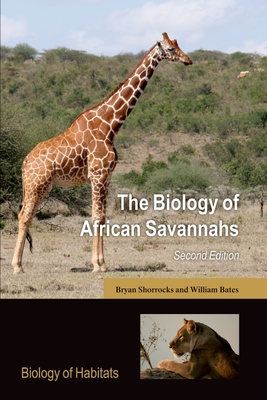
The Biology of African Savannahs
| AUTHOR | Shorrocks, Bates; Shorrocks, Bates; Shorrocks, Bates et al. |
| PUBLISHER | Academic (01/27/2015) |
| PRODUCT TYPE | Paperback (Paperback) |
Description
Savannah habitats comprise an ecologically important, but ultimately fragile, ecosystem. They constitute one of the largest biomes on Earth, covering almost 20% of the land surface, and can be simply described as tropical and subtropical grasslands with scattered bushes and trees. Most savannahs occur in Africa, although smaller areas can be found in South America, India, and Australia. They form a rich mosaic of diverse ecosystems, and this book offers a concise but comprehensive introduction to their ecology, biodiversity, and conservation. The Biology of African Savannahs describes the major plants (grasses, and trees such as Acacia) and animals (mainly large mammals) that live in this habitat, and examines the biological and ecological factors that influence their population size, interactions (such as predation), and community composition. Conservation issues such as climate change, hunting, and conflict between wildlife and domestic animals are also discussed. This new edition has been updated throughout with the latest research in the field, and contains new technique boxes which introduce readers to some of the analytical methods used to study African savannahs. This accessible text is suitable for both senior undergraduate and graduate students taking courses in savannah and tropical ecology as part of a wider ecology and/or conservation biology degree programme. It will also be of relevance and use to the many professional ecologists and conservation practitioners requiring a concise but authoritative overview of the topic.
Show More
Product Format
Product Details
ISBN-13:
9780198702719
ISBN-10:
019870271X
Binding:
Paperback or Softback (Trade Paperback (Us))
Content Language:
English
Edition Number:
0002
More Product Details
Page Count:
352
Carton Quantity:
22
Product Dimensions:
6.00 x 0.90 x 8.80 inches
Weight:
0.75 pound(s)
Feature Codes:
Bibliography,
Index,
Maps,
Illustrated
Country of Origin:
GB
Subject Information
BISAC Categories
Science | Life Sciences - Ecology
Science | Life Sciences - Botany
Dewey Decimal:
577.48
Library of Congress Control Number:
2014946890
Descriptions, Reviews, Etc.
publisher marketing
Savannah habitats comprise an ecologically important, but ultimately fragile, ecosystem. They constitute one of the largest biomes on Earth, covering almost 20% of the land surface, and can be simply described as tropical and subtropical grasslands with scattered bushes and trees. Most savannahs occur in Africa, although smaller areas can be found in South America, India, and Australia. They form a rich mosaic of diverse ecosystems, and this book offers a concise but comprehensive introduction to their ecology, biodiversity, and conservation. The Biology of African Savannahs describes the major plants (grasses, and trees such as Acacia) and animals (mainly large mammals) that live in this habitat, and examines the biological and ecological factors that influence their population size, interactions (such as predation), and community composition. Conservation issues such as climate change, hunting, and conflict between wildlife and domestic animals are also discussed. This new edition has been updated throughout with the latest research in the field, and contains new technique boxes which introduce readers to some of the analytical methods used to study African savannahs. This accessible text is suitable for both senior undergraduate and graduate students taking courses in savannah and tropical ecology as part of a wider ecology and/or conservation biology degree programme. It will also be of relevance and use to the many professional ecologists and conservation practitioners requiring a concise but authoritative overview of the topic.
Show More
List Price $84.00
Your Price
$83.16