
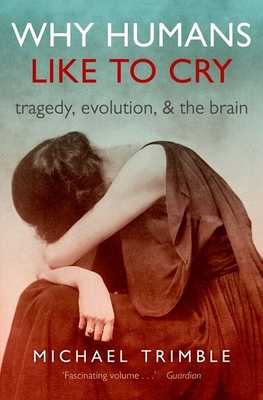
Why Humans Like to Cry: Tragedy, Evolution, and the Brain
| AUTHOR | Trimble, Michael |
| PUBLISHER | Oxford University Press (UK) (10/28/2014) |
| PRODUCT TYPE | Paperback (Paperback) |
Description
Human beings are the only species to have evolved the trait of emotional crying. We weep at tragedies in our lives and in those of others - remarkably even when they are fictional characters in film, opera, music, novels, and theatre. Why have we developed art forms - most powerfully, music - which move us to sadness and tears? This question forms the backdrop to Michael Trimble's discussion of emotional crying, its physiology, and its evolutionary implications. His exploration examines the connections with other distinctively human features: the development of language, self-consciousness, religious practices, and empathy. Neuroanatomy and neurophysiology of the brain have uncovered unique human characteristics; mirror neurones, for example, explain why we unconsciously imitate actions and behaviour. Whereas Nietzsche argued that artistic tragedy was born with the ancient Greeks, Trimble places its origins far earlier. His neurophysiological and evolutionary insights shed fascinating light onto this enigmatic part of our humanity.
Show More
Product Format
Product Details
ISBN-13:
9780198713494
ISBN-10:
0198713495
Binding:
Paperback or Softback (Trade Paperback (Us))
Content Language:
English
More Product Details
Page Count:
242
Carton Quantity:
32
Product Dimensions:
5.10 x 0.57 x 7.73 inches
Weight:
0.45 pound(s)
Feature Codes:
Bibliography,
Index,
Price on Product,
Table of Contents,
Glossary
Country of Origin:
GB
Subject Information
BISAC Categories
Science | Life Sciences - Human Anatomy & Physiology
Science | Life Sciences - Neuroscience
Science | Emotions
Dewey Decimal:
152.6
Descriptions, Reviews, Etc.
publisher marketing
Human beings are the only species to have evolved the trait of emotional crying. We weep at tragedies in our lives and in those of others - remarkably even when they are fictional characters in film, opera, music, novels, and theatre. Why have we developed art forms - most powerfully, music - which move us to sadness and tears? This question forms the backdrop to Michael Trimble's discussion of emotional crying, its physiology, and its evolutionary implications. His exploration examines the connections with other distinctively human features: the development of language, self-consciousness, religious practices, and empathy. Neuroanatomy and neurophysiology of the brain have uncovered unique human characteristics; mirror neurones, for example, explain why we unconsciously imitate actions and behaviour. Whereas Nietzsche argued that artistic tragedy was born with the ancient Greeks, Trimble places its origins far earlier. His neurophysiological and evolutionary insights shed fascinating light onto this enigmatic part of our humanity.
Show More
Author:
Trimble, Michael
Professor Trimble has been at the forefront of the developing field of neuropsychiatry for over 20 years. His special interest is in seizure disorders and he runs a research unit devoted to neuropsychiatry and behavioural neurology. Dob 20.5.46.
Show More
List Price $19.98
Your Price
$19.78