
ISBN 9780199603305 is out of print and is currently unavailable, alternate formats (if applicable) are shown below.
Available options are listed below:
Available options are listed below:
A Small Town Near Auschwitz: Ordinary Nazis and the Holocaust (Out of print)
| AUTHOR | Fulbrook, Mary |
| PUBLISHER | Oxford University Press, USA (11/09/2012) |
| PRODUCT TYPE | Hardcover (Hardcover) |
Description
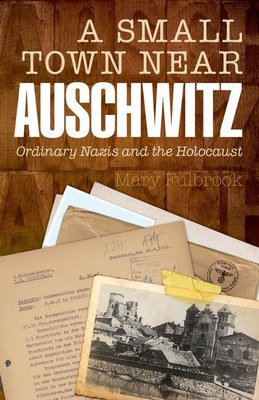
The Silesian town of Bedzin lies a mere twenty-five miles from Auschwitz; through the linked ghettos of Bedzin and its neighbouring town, some 85,000 Jews passed on their way to slave labour or the gas chambers. The principal civilian administrator of Bedzin, Udo Klausa, was a happily married family man. He was also responsible for implementing Nazi policies towards the Jews in his area - inhumane processes that were the precursors of genocide. Yet he later claimed, like so many other Germans after the war, that he had 'known nothing about it'; and that he had personally tried to save a Jew before he himself managed to leave for military service. A Small Town Near Auschwitz re-creates Udo Klausa's story. Using a wealth of personal letters, memoirs, testimonies, interviews and other sources, Mary Fulbrook pieces together his role in the unfolding stigmatization and degradation of the Jews under his authoritiy, as well as the heroic attempts at resistance on the part of some of his victims. She also gives us a fascinating insight into the inner conflicts of a Nazi functionary who, throughout, considered himself a 'decent' man. And she explores the conflicting memories and evasions of his life after the war. But the book is much more than a portrayal of an individual man. Udo Klausa's case is so important because it is in many ways so typical. Behind Klausa's story is the larger story of how countless local functionaries across the Third Reich facilitated the murderous plans of a relatively small number among the Nazi elite - and of how those plans could never have been realized, on the same scale, without the diligent cooperation of these generally very ordinary administrators. As Fulbrook shows, men like Klausa 'knew' and yet mostly suppressed this knowledge, performing their day jobs without apparent recognition of their own role in the system, or any sense of personal wrongdoing or remorse - either before or after 1945. This account is no ordinary historical reconstruction. For Fulbrook did not discover Udo Klausa amongst the archives. She has known the Klausa family all her life. She had no inkling of her subject's true role in the Third Reich until a few years ago, a discovery that led directly to this inescapably personal professional history.
Show More
Product Format
Product Details
ISBN-13:
9780199603305
ISBN-10:
0199603308
Binding:
Hardback or Cased Book (Unsewn / Adhesive Bound)
Content Language:
English
More Product Details
Page Count:
464
Carton Quantity:
1
Product Dimensions:
6.30 x 1.20 x 9.30 inches
Weight:
1.75 pound(s)
Feature Codes:
Bibliography,
Index,
Dust Cover,
Price on Product,
Table of Contents,
Illustrated
Country of Origin:
GB
Subject Information
BISAC Categories
History | Eastern Europe - General
History | Modern - 20th Century - Holocaust
History | Wars & Conflicts - World War II - General
Dewey Decimal:
B
Descriptions, Reviews, Etc.
publisher marketing
The Silesian town of Bedzin lies a mere twenty-five miles from Auschwitz; through the linked ghettos of Bedzin and its neighbouring town, some 85,000 Jews passed on their way to slave labour or the gas chambers. The principal civilian administrator of Bedzin, Udo Klausa, was a happily married family man. He was also responsible for implementing Nazi policies towards the Jews in his area - inhumane processes that were the precursors of genocide. Yet he later claimed, like so many other Germans after the war, that he had 'known nothing about it'; and that he had personally tried to save a Jew before he himself managed to leave for military service. A Small Town Near Auschwitz re-creates Udo Klausa's story. Using a wealth of personal letters, memoirs, testimonies, interviews and other sources, Mary Fulbrook pieces together his role in the unfolding stigmatization and degradation of the Jews under his authoritiy, as well as the heroic attempts at resistance on the part of some of his victims. She also gives us a fascinating insight into the inner conflicts of a Nazi functionary who, throughout, considered himself a 'decent' man. And she explores the conflicting memories and evasions of his life after the war. But the book is much more than a portrayal of an individual man. Udo Klausa's case is so important because it is in many ways so typical. Behind Klausa's story is the larger story of how countless local functionaries across the Third Reich facilitated the murderous plans of a relatively small number among the Nazi elite - and of how those plans could never have been realized, on the same scale, without the diligent cooperation of these generally very ordinary administrators. As Fulbrook shows, men like Klausa 'knew' and yet mostly suppressed this knowledge, performing their day jobs without apparent recognition of their own role in the system, or any sense of personal wrongdoing or remorse - either before or after 1945. This account is no ordinary historical reconstruction. For Fulbrook did not discover Udo Klausa amongst the archives. She has known the Klausa family all her life. She had no inkling of her subject's true role in the Third Reich until a few years ago, a discovery that led directly to this inescapably personal professional history.
Show More
Author:
Fulbrook, Mary
Mary Fulbrook is Professor of German History, University College London.
Show More
List Price $34.95
Your Price
$34.60