
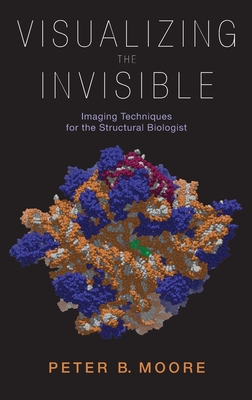
Visualizing the Invisible: Imaging Techniques for the Structural Biologist
| AUTHOR | Moore, Peter; Moore, Peter; Moore, Peter et al. |
| PUBLISHER | OUP Us (04/02/2012) |
| PRODUCT TYPE | Hardcover (Hardcover) |
Description
Knowledge of the microscopic structure of biological systems is the key to understanding their physiological properties. Most of what we now know about this subject has been generated by techniques that produce images of the materials of interest, one way or another, and there is every reason to believe that the impact of these techniques on the biological sciences will be every bit as important in the future as they are today. Thus the 21st century biologist needs to understand how microscopic imaging techniques work, as it is likely that sooner or later he or she will have to use one or another of them, or will otherwise become dependent on the information that they provide. The objective of this textbook is to introduce its readers to the many techniques now available for imaging biological materials, e.g. crystallography, optical microscopy and electron microscopy, at a level that will enable them to use them effectively to do research. Since all of these experimental methods are best understood in terms of Fourier transformations, this book explains the relevant concepts from this branch of mathematics, and then illustrates their elegance and power by applying them to each of the techniques presented. The book is derived from a one-term course in structural biology that the author gave for many years at Yale. It is intended for students interested either in doing structural research themselves, or in exploiting structural information produced by others. Over the years, the course was taken successfully by advanced undergraduates and by graduate students. Scientists interested in entering the structural biology field later in their careers may also find it useful.
Show More
Product Format
Product Details
ISBN-13:
9780199767090
ISBN-10:
0199767092
Binding:
Hardback or Cased Book (Unsewn / Adhesive Bound)
Content Language:
English
More Product Details
Page Count:
384
Carton Quantity:
16
Product Dimensions:
6.10 x 1.00 x 9.30 inches
Weight:
1.50 pound(s)
Feature Codes:
Bibliography,
Index,
Table of Contents,
Illustrated
Country of Origin:
US
Subject Information
BISAC Categories
Science | Life Sciences - Molecular Biology
Science | Life Sciences - Biophysics
Science | Life Sciences - Biochemistry
Dewey Decimal:
571.633
Library of Congress Control Number:
2011027000
Descriptions, Reviews, Etc.
publisher marketing
Knowledge of the microscopic structure of biological systems is the key to understanding their physiological properties. Most of what we now know about this subject has been generated by techniques that produce images of the materials of interest, one way or another, and there is every reason to believe that the impact of these techniques on the biological sciences will be every bit as important in the future as they are today. Thus the 21st century biologist needs to understand how microscopic imaging techniques work, as it is likely that sooner or later he or she will have to use one or another of them, or will otherwise become dependent on the information that they provide. The objective of this textbook is to introduce its readers to the many techniques now available for imaging biological materials, e.g. crystallography, optical microscopy and electron microscopy, at a level that will enable them to use them effectively to do research. Since all of these experimental methods are best understood in terms of Fourier transformations, this book explains the relevant concepts from this branch of mathematics, and then illustrates their elegance and power by applying them to each of the techniques presented. The book is derived from a one-term course in structural biology that the author gave for many years at Yale. It is intended for students interested either in doing structural research themselves, or in exploiting structural information produced by others. Over the years, the course was taken successfully by advanced undergraduates and by graduate students. Scientists interested in entering the structural biology field later in their careers may also find it useful.
Show More
List Price $150.00
Your Price
$148.50