
Available options are listed below:
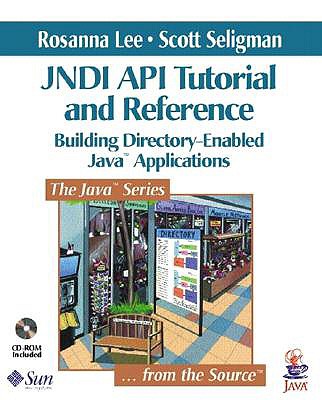
Jndi API Tutorial and Reference: Building Directory-Enabled Java Applications (Out of print)
| AUTHOR | Seligman, Scott; Lee, Rosanna |
| PUBLISHER | Addison-Wesley Professional (06/12/2000) |
| PRODUCT TYPE | Paperback (Paperback) |
-- The most comprehensive and advanced coverage available.
-- Shows how to work with LDAP and JNDI.
Directory services are the key applications which provide a means to locate and organize users and resources on a network. Directories are repositories (like a phone book) containing information on users such as email addresses, phone numbers, security passwords and access rights to things like printers and servers. Using Sun's Java Naming and Directory Interface (JNDI), Java developers and network professionals can build powerful and portable applications throughout the enterprise. Now, JNDI's architect and one of its lead developers team up to present the first comprehensive JNDI tutorial and reference: everything developers need to build world-class directory-enabled applications with Java. Starting from the basic foundations, the book introduces key JNDI concepts and techniques needed to write, compile, and run JNDI applications. The tutorial then moves to more sophisticated topics, walking developers through building their own service providers, accounting for security, and creating schema and attributes. There are detailed comparisons between JNDI and LDAP, as well as practical techniques for integrating with DNS, NDS, NIS+, and other directory services. The book also contains a comprehensive JNDI reference covering every element of the API.
This book provides an introduction to naming and directory technologies and an overview of the Java Naming and Directory Interface(TM) (JNDI). The tutorial in this book progresses from the most basic to advanced JNDI capabilities and techniques, including more than 200 working examples that demonstrate writing, compiling, and running directory-enabled Java(TM) programs. In addition, this book contains a comprehensive reference section that documents all JNDI classes and interfaces.
JNDI enables programs written in the Java programming language to access naming and directory services--a vital element of the complex distributed computing environment for today's enterprise systems. A platform-independent interface, JNDI allows Java applications to work with standard and proprietary services from a variety of vendors--including the Lightweight Directory Access Protocol (LDAP), Novell Directory Service (NDS), Microsoft Active Directory, and the Solaris(TM) Operating Environment Network Information Service (NIS)--so that enterprises need not lock into a single-vendor solution.
Specific topics covered include:
- Accessing the LDAP via JNDI
- Using the directory as an object repository
- Configuring a JNDI client
- Handling event notifications from the directory
- Creating a federation of naming systems
- Building a JNDI service provider
All developers using the Java programming language to write applications or subsystems that access naming and directory services will find this book an indispensable resource.
0201705028B04062001-- The most comprehensive and advanced coverage available.
-- Shows how to work with LDAP and JNDI.
Directory services are the key applications which provide a means to locate and organize users and resources on a network. Directories are repositories (like a phone book) containing information on users such as email addresses, phone numbers, security passwords and access rights to things like printers and servers. Using Sun's Java Naming and Directory Interface (JNDI), Java developers and network professionals can build powerful and portable applications throughout the enterprise. Now, JNDI's architect and one of its lead developers team up to present the first comprehensive JNDI tutorial and reference: everything developers need to build world-class directory-enabled applications with Java. Starting from the basic foundations, the book introduces key JNDI concepts and techniques needed to write, compile, and run JNDI applications. The tutorial then moves to more sophisticated topics, walking developers through building their own service providers, accounting for security, and creating schema and attributes. There are detailed comparisons between JNDI and LDAP, as well as practical techniques for integrating with DNS, NDS, NIS+, and other directory services. The book also contains a comprehensive JNDI reference covering every element of the API.