
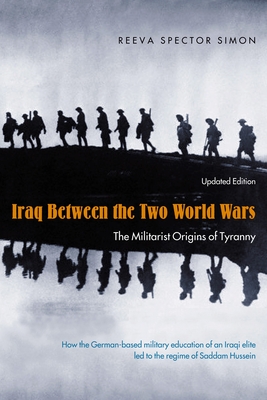
Iraq Between the Two World Wars: The Militarist Origins of Tyranny
| AUTHOR | Simon, Reeva Spector |
| PUBLISHER | Columbia University Press (06/09/2004) |
| PRODUCT TYPE | Paperback (Paperback) |
Description
Why did a group from the Iraqi army seize control of the government and wage a disastrous war against Great Britain, rejecting British and liberal values for those of a militaristic Germany? What impact did these actions have on the thirty-year regime of Saddam Hussein?
Departing from previous studies explaining modern Iraqi history in terms of class theory, Reeva Simon shows that cultural and ideological factors played an equal, if not more important, role in shaping events. In 1921 the British created Iraq, and an entourage of ex-Ottoman army officers, the Sharifians, became the new ruling elite. Simon contends that this elite, returning to an Iraq made up of different ethnic, religious, and social groups, had to weld these disparate elements into a nation. Pan-Arabism was to be the new ideological source of unity and loyalty. Schools and the army became the means through which to implant it, and a series of military coups gave the officers the chance to act in its name. The result was an abortive revolt against Britain in 1941. And the legacy of the revolt is still apparent in the next two generations of Iraqi officers that led to the regime of Saddam Hussein. This updated edition locates the sources of Iraqi nationalism in the experience of these ex-Ottoman army officers who used the emergent pan-Arabism to weld a disparate population into a nation. Simon shows that the relationships forged between Iraqi officers and Germans in Istanbul before WWI left deep legacies that go a long way toward explaining the disastrous war against Great Britain in 1941, the rejection of liberal values, the revolution of 1958 in which the military finally seized power, and the outlook of the leadership recently overthrown by American and British armies.
Show More
Product Format
Product Details
ISBN-13:
9780231132152
ISBN-10:
0231132158
Binding:
Paperback or Softback (Trade Paperback (Us))
Content Language:
English
Edition Number:
0002
More Product Details
Page Count:
256
Carton Quantity:
30
Product Dimensions:
6.04 x 0.54 x 9.04 inches
Weight:
0.77 pound(s)
Feature Codes:
Bibliography,
Index,
Table of Contents
Country of Origin:
US
Subject Information
BISAC Categories
History | Middle East - General
History | International Relations - General
Grade Level:
Post Graduate
and up
Accelerated Reader:
Reading Level:
0
Point Value:
0
Guided Reading Level:
Not Applicable
Dewey Decimal:
956.704
Library of Congress Control Number:
2003070003
Descriptions, Reviews, Etc.
publisher marketing
Why did a group from the Iraqi army seize control of the government and wage a disastrous war against Great Britain, rejecting British and liberal values for those of a militaristic Germany? What impact did these actions have on the thirty-year regime of Saddam Hussein?
Departing from previous studies explaining modern Iraqi history in terms of class theory, Reeva Simon shows that cultural and ideological factors played an equal, if not more important, role in shaping events. In 1921 the British created Iraq, and an entourage of ex-Ottoman army officers, the Sharifians, became the new ruling elite. Simon contends that this elite, returning to an Iraq made up of different ethnic, religious, and social groups, had to weld these disparate elements into a nation. Pan-Arabism was to be the new ideological source of unity and loyalty. Schools and the army became the means through which to implant it, and a series of military coups gave the officers the chance to act in its name. The result was an abortive revolt against Britain in 1941. And the legacy of the revolt is still apparent in the next two generations of Iraqi officers that led to the regime of Saddam Hussein. This updated edition locates the sources of Iraqi nationalism in the experience of these ex-Ottoman army officers who used the emergent pan-Arabism to weld a disparate population into a nation. Simon shows that the relationships forged between Iraqi officers and Germans in Istanbul before WWI left deep legacies that go a long way toward explaining the disastrous war against Great Britain in 1941, the rejection of liberal values, the revolution of 1958 in which the military finally seized power, and the outlook of the leadership recently overthrown by American and British armies.
Show More
Author:
Simon, Reeva Spector
REEVA SPECTOR SIMON is Professor of History at Yeshiva University. She previously served as Associate Director of the Middle East Institute at Columbia University and is the author of Iraq between the Two World Wars.
Show More
Your Price
$36.63