
Available options are listed below:
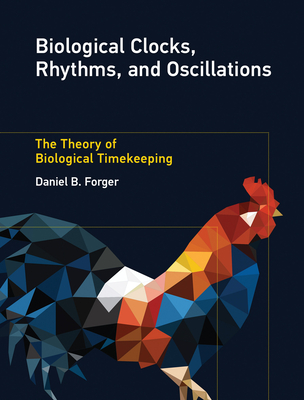
Biological Clocks, Rhythms, and Oscillations: The Theory of Biological Timekeeping (Out of print)
| AUTHOR | Forger, Daniel B. |
| PUBLISHER | MIT Press (11/16/2017) |
| PRODUCT TYPE | Hardcover (Hardcover) |
All areas of biology and medicine contain rhythms, and these behaviors are best understood through mathematical tools and techniques. This book offers a survey of mathematical, computational, and analytical techniques used for modeling biological rhythms, gathering these methods for the first time in one volume. Drawing on material from such disciplines as mathematical biology, nonlinear dynamics, physics, statistics, and engineering, it presents practical advice and techniques for studying biological rhythms, with a common language.
The chapters proceed with increasing mathematical abstraction. Part I, on models, highlights the implicit assumptions and common pitfalls of modeling, and is accessible to readers with basic knowledge of differential equations and linear algebra. Part II, on behaviors, focuses on simpler models, describing common properties of biological rhythms that range from the firing properties of squid giant axon to human circadian rhythms. Part III, on mathematical techniques, guides readers who have specific models or goals in mind. Sections on "frontiers" present the latest research; "theory" sections present interesting mathematical results using more accessible approaches than can be found elsewhere. Each chapter offers exercises. Commented MATLAB code is provided to help readers get practical experience.
The book, by an expert in the field, can be used as a textbook for undergraduate courses in mathematical biology or graduate courses in modeling biological rhythms and as a reference for researchers.
All areas of biology and medicine contain rhythms, and these behaviors are best understood through mathematical tools and techniques. This book offers a survey of mathematical, computational, and analytical techniques used for modeling biological rhythms, gathering these methods for the first time in one volume. Drawing on material from such disciplines as mathematical biology, nonlinear dynamics, physics, statistics, and engineering, it presents practical advice and techniques for studying biological rhythms, with a common language.
The chapters proceed with increasing mathematical abstraction. Part I, on models, highlights the implicit assumptions and common pitfalls of modeling, and is accessible to readers with basic knowledge of differential equations and linear algebra. Part II, on behaviors, focuses on simpler models, describing common properties of biological rhythms that range from the firing properties of squid giant axon to human circadian rhythms. Part III, on mathematical techniques, guides readers who have specific models or goals in mind. Sections on "frontiers" present the latest research; "theory" sections present interesting mathematical results using more accessible approaches than can be found elsewhere. Each chapter offers exercises. Commented MATLAB code is provided to help readers get practical experience.
The book, by an expert in the field, can be used as a textbook for undergraduate courses in mathematical biology or graduate courses in modeling biological rhythms and as a reference for researchers.