
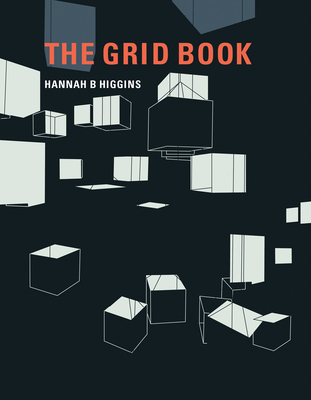
The Grid Book
| AUTHOR | Higgins, Hannah B.; Higgins, Hannah B. |
| PUBLISHER | MIT Press (03/01/2009) |
| PRODUCT TYPE | Paperback (Paperback) |
Emblematic of modernity, the grid is the underlying form of everything from skyscrapers and office cubicles to paintings by Mondrian and a piece of computer code. And yet, as Hannah Higgins makes clear in this engaging and evocative book, the grid has a history that long predates modernity; it is the most prominent visual structure in Western culture. In The Grid Book, Higgins examines the history of ten grids that changed the world: the brick, the tablet, the gridiron city plan, the map, musical notation, the ledger, the screen, moveable type, the manufactured box, and the net. Charting the evolution of each grid, from the Paleolithic brick of ancient Mesopotamia through the virtual connections of the Internet, Higgins demonstrates that once a grid is invented, it may bend, crumble, or shatter, but its organizing principle never disappears. The appearance of each grid was a watershed event. Brick, tablet, and city gridiron made possible sturdy housing, the standardization of language, and urban development. Maps, musical notation, financial ledgers, and moveable type promoted the organization of space, music, and time, international trade, and mass literacy. The screen of perspective painting heralded the science of the modern period, classical mechanics, and the screen arts, while the standardization of space made possible by the manufactured box suggested the purified box forms of industrial architecture and visual art. The net, the most ancient grid, made its first appearance in Stone Age Finland; today, the loose but clearly articulated networks of the World Wide Web suggest that we are in the middle of an emergent grid that is reshaping the world, as grids do, in its image.
Emblematic of modernity, the grid is the underlying form of everything from skyscrapers and office cubicles to paintings by Mondrian and a piece of computer code. And yet, as Hannah Higgins makes clear in this engaging and evocative book, the grid has a history that long predates modernity; it is the most prominent visual structure in Western culture. In The Grid Book, Higgins examines the history of ten grids that changed the world: the brick, the tablet, the gridiron city plan, the map, musical notation, the ledger, the screen, moveable type, the manufactured box, and the net. Charting the evolution of each grid, from the Paleolithic brick of ancient Mesopotamia through the virtual connections of the Internet, Higgins demonstrates that once a grid is invented, it may bend, crumble, or shatter, but its organizing principle never disappears. The appearance of each grid was a watershed event. Brick, tablet, and city gridiron made possible sturdy housing, the standardization of language, and urban development. Maps, musical notation, financial ledgers, and moveable type promoted the organization of space, music, and time, international trade, and mass literacy. The screen of perspective painting heralded the science of the modern period, classical mechanics, and the screen arts, while the standardization of space made possible by the manufactured box suggested the purified box forms of industrial architecture and visual art. The net, the most ancient grid, made its first appearance in Stone Age Finland; today, the loose but clearly articulated networks of the World Wide Web suggest that we are in the middle of an emergent grid that is reshaping the world, as grids do, in its image.