
Back to Search

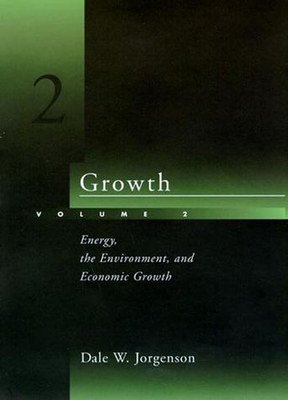
Growth, Volume 2: Energy, the Environment, and Economic Growth

AUTHOR Jorgenson, Dale W.; Jorgenson, Dale W.
PUBLISHER MIT Press (12/07/1998)
PRODUCT TYPE Paperback (Paperback)

Description
Volume 1: Econometric General Equilibrium Modeling presents an econometric approach to general equilibrium modeling of the impact of economic policies. Earlier approaches were based on the "calibration" of general equilibrium models to a single data point. The obvious disadvantage of calibration is that it requires highly restrictive assumptions about technology and preferences, such as fixed input-output coefficients. These assumptions are contradicted by the massive evidence of energy conservation in response to higher world energy prices, beginning in 1973. The econometric approach to general equilibrium modeling successfully freed economic policy analysis from the straitjacket imposed by calibration.

As a consequence of changes in energy prices and new environmental policies, a wealth of historical experience has accumulated over the past two decades. Interpreted within the framework of the neoclassical theory of economic growth, this experience provides essential guidelines for future policy formation. Volume 2: Energy, the Environment, and Economic Growth presents a new econometric general equilibrium model of the United States that captures the dynamic mechanisms underlying growth trends and responses to energy and environmental policies. Jorgenson uses the model to analyze the impacts of environmental regulations on US economic growth and tax policies for controlling US emissions of carbon dioxide.

Show More
Product Format
Product Details
ISBN-13: 9780262519236
ISBN-10: 0262519232
Binding: Paperback or Softback (Trade Paperback (Us))
Content Language: English
More Product Details
Page Count: 502
Carton Quantity: 16
Product Dimensions: 6.00 x 0.90 x 9.00 inches
Weight: 1.45 pound(s)
Feature Codes: Bibliography, Index, Table of Contents
Country of Origin: US
Subject Information
BISAC Categories
Business & Economics | Economics - General
Business & Economics | Development - Economic Development
Grade Level: College Freshman and up
Dewey Decimal: 338.9
Descriptions, Reviews, Etc.
publisher marketing
Volume 1: Econometric General Equilibrium Modeling presents an econometric approach to general equilibrium modeling of the impact of economic policies. Earlier approaches were based on the "calibration" of general equilibrium models to a single data point. The obvious disadvantage of calibration is that it requires highly restrictive assumptions about technology and preferences, such as fixed input-output coefficients. These assumptions are contradicted by the massive evidence of energy conservation in response to higher world energy prices, beginning in 1973. The econometric approach to general equilibrium modeling successfully freed economic policy analysis from the straitjacket imposed by calibration.

As a consequence of changes in energy prices and new environmental policies, a wealth of historical experience has accumulated over the past two decades. Interpreted within the framework of the neoclassical theory of economic growth, this experience provides essential guidelines for future policy formation. Volume 2: Energy, the Environment, and Economic Growth presents a new econometric general equilibrium model of the United States that captures the dynamic mechanisms underlying growth trends and responses to energy and environmental policies. Jorgenson uses the model to analyze the impacts of environmental regulations on US economic growth and tax policies for controlling US emissions of carbon dioxide.

Show More
Your Price  $39.60
Paperback