
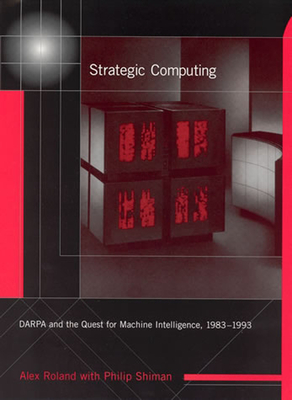
Strategic Computing: Darpa and the Quest for Machine Intelligence, 1983-1993
| AUTHOR | Roland, Alex; Aspray, William; Roland, Alex et al. |
| PUBLISHER | MIT Press (09/13/2002) |
| PRODUCT TYPE | Paperback (Paperback) |
This is the story of an extraordinary effort by the U.S. Department of Defense to hasten the advent of "machines that think." From 1983 to 1993, the Defense Advanced Research Projects Agency (DARPA) spent an extra $1 billion on computer research aimed at achieving artificial intelligence. The Strategic Computing Initiative (SCI) was conceived as an integrated plan to promote computer chip design and manufacture, computer architecture, and artificial intelligence software. What distinguished SCI from other large-scale technology programs was that it self-consciously set out to advance an entire research front. The SCI succeeded in fostering significant technological successes, even though it never achieved machine intelligence. The goal provided a powerful organizing principle for a suite of related research programs, but it did not solve the problem of coordinating these programs. In retrospect, it is hard to see how it could have.In Strategic Computing, Alex Roland and Philip Shiman uncover the roles played in the SCI by technology, individuals, and social and political forces. They explore DARPA culture, especially the information processing culture within the agency, and they evaluate the SCI's accomplishments and set them in the context of overall computer development during this period. Their book is an important contribution to our understanding of the complex sources of contemporary computing.
This is the story of an extraordinary effort by the U.S. Department of Defense to hasten the advent of "machines that think." From 1983 to 1993, the Defense Advanced Research Projects Agency (DARPA) spent an extra $1 billion on computer research aimed at achieving artificial intelligence. The Strategic Computing Initiative (SCI) was conceived as an integrated plan to promote computer chip design and manufacture, computer architecture, and artificial intelligence software. What distinguished SCI from other large-scale technology programs was that it self-consciously set out to advance an entire research front. The SCI succeeded in fostering significant technological successes, even though it never achieved machine intelligence. The goal provided a powerful organizing principle for a suite of related research programs, but it did not solve the problem of coordinating these programs. In retrospect, it is hard to see how it could have.In Strategic Computing, Alex Roland and Philip Shiman uncover the roles played in the SCI by technology, individuals, and social and political forces. They explore DARPA culture, especially the information processing culture within the agency, and they evaluate the SCI's accomplishments and set them in the context of overall computer development during this period. Their book is an important contribution to our understanding of the complex sources of contemporary computing.