
Radicalism in the Wilderness: International Contemporaneity and 1960s Art in Japan
| AUTHOR | Tomii, Reiko; Tomii, Reiko |
| PUBLISHER | MIT Press (03/23/2018) |
| PRODUCT TYPE | Paperback (Paperback) |
1960s Japan was one of the world's major frontiers of vanguard art. As Japanese artists developed diverse practices parallel to, and sometimes antecedent to, their Western counterparts, they found themselves in a new reality of "international contemporaneity" (kokusaiteki dōjisei). In this book Reiko Tomii examines three key figures in Japanese art of the 1960s who made radical and inventive art in the "wilderness"--away from Tokyo, outside traditional norms, and with little institutional support.
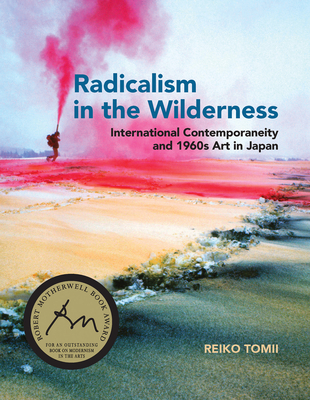
These practitioners are the conceptualist Matsuzawa Yutaka, known for the principle of "vanishing of matter" and the practice of "meditative visualization" (kannen); The Play, a collective of "Happeners"; and the local collective GUN (Group Ultra Niigata). The innovative work of these artists included a visionary exhibition in Central Japan of "formless emissions" organized by Matsuzwa; the launching of a huge fiberglass egg--"an image of liberation"--from the southernmost tip of Japan's main island by The Play; and gorgeous color field abstractions painted by GUN on accumulating snow on the riverbeds of the Shinano River. Pioneers in conceptualism, performance art, land art, mail art, and political art, these artists delved into the local and achieved global relevance.
Making "connections" and finding "resonances" between these three practitioners and artists elsewhere, Tomii links their local practices to the global narrative and illuminates the fundamentally "similar yet dissimilar" characteristics of their work. In her reading, Japan becomes a paradigmatic site of world art history, on the periphery but asserting its place through hard-won international contemporaneity.
1960s Japan was one of the world's major frontiers of vanguard art. As Japanese artists developed diverse practices parallel to, and sometimes antecedent to, their Western counterparts, they found themselves in a new reality of "international contemporaneity" (kokusaiteki dōjisei). In this book Reiko Tomii examines three key figures in Japanese art of the 1960s who made radical and inventive art in the "wilderness"--away from Tokyo, outside traditional norms, and with little institutional support.
These practitioners are the conceptualist Matsuzawa Yutaka, known for the principle of "vanishing of matter" and the practice of "meditative visualization" (kannen); The Play, a collective of "Happeners"; and the local collective GUN (Group Ultra Niigata). The innovative work of these artists included a visionary exhibition in Central Japan of "formless emissions" organized by Matsuzwa; the launching of a huge fiberglass egg--"an image of liberation"--from the southernmost tip of Japan's main island by The Play; and gorgeous color field abstractions painted by GUN on accumulating snow on the riverbeds of the Shinano River. Pioneers in conceptualism, performance art, land art, mail art, and political art, these artists delved into the local and achieved global relevance.
Making "connections" and finding "resonances" between these three practitioners and artists elsewhere, Tomii links their local practices to the global narrative and illuminates the fundamentally "similar yet dissimilar" characteristics of their work. In her reading, Japan becomes a paradigmatic site of world art history, on the periphery but asserting its place through hard-won international contemporaneity.