
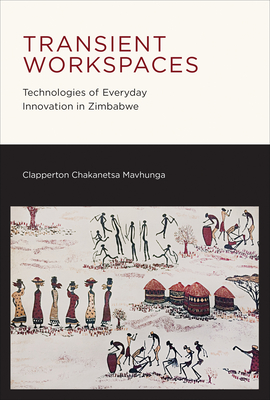
Transient Workspaces: Technologies of Everyday Innovation in Zimbabwe
| AUTHOR | Mavhunga, Clapperton Chakanets; Mavhunga, Clapperton Chakanets; Mavhunga, Clapperton Chakanetsa |
| PUBLISHER | MIT Press (09/19/2014) |
| PRODUCT TYPE | Paperback (Paperback) |
In this book, Clapperton Mavhunga views technology in Africa from an African perspective. Technology in his account is not something always brought in from outside, but is also something that ordinary people understand, make, and practice through their everyday innovations or creativities--including things that few would even consider technological. Technology does not always originate in the laboratory in a Western-style building but also in the society in the forest, in the crop field, and in other places where knowledge is made and turned into practical outcomes.
African creativities are found in African mobilities. Mavhunga shows the movement of people as not merely conveyances across space but transient workspaces. Taking indigenous hunting in Zimbabwe as one example, he explores African philosophies of mobilities as spiritually guided and of the forest as a sacred space. Viewing the hunt as guided mobility, Mavhunga considers interesting questions of what constitutes technology under regimes of spirituality. He describes how African hunters extended their knowledge traditions to domesticate the gun, how European colonizers, with no remedy of their own, turned to indigenous hunters for help in combating the deadly tsetse fly, and examines how wildlife conservation regimes have criminalized African hunting rather than enlisting hunters (and their knowledge) as allies in wildlife sustainability. The hunt, Mavhunga writes, is one of many criminalized knowledges and practices to which African people turn in times of economic or political crisis. He argues that these practices need to be decriminalized and examined as technologies of everyday innovation with a view toward constructive engagement, innovating with Africans rather than for them.
In this book, Clapperton Mavhunga views technology in Africa from an African perspective. Technology in his account is not something always brought in from outside, but is also something that ordinary people understand, make, and practice through their everyday innovations or creativities--including things that few would even consider technological. Technology does not always originate in the laboratory in a Western-style building but also in the society in the forest, in the crop field, and in other places where knowledge is made and turned into practical outcomes.
African creativities are found in African mobilities. Mavhunga shows the movement of people as not merely conveyances across space but transient workspaces. Taking indigenous hunting in Zimbabwe as one example, he explores African philosophies of mobilities as spiritually guided and of the forest as a sacred space. Viewing the hunt as guided mobility, Mavhunga considers interesting questions of what constitutes technology under regimes of spirituality. He describes how African hunters extended their knowledge traditions to domesticate the gun, how European colonizers, with no remedy of their own, turned to indigenous hunters for help in combating the deadly tsetse fly, and examines how wildlife conservation regimes have criminalized African hunting rather than enlisting hunters (and their knowledge) as allies in wildlife sustainability. The hunt, Mavhunga writes, is one of many criminalized knowledges and practices to which African people turn in times of economic or political crisis. He argues that these practices need to be decriminalized and examined as technologies of everyday innovation with a view toward constructive engagement, innovating with Africans rather than for them.