
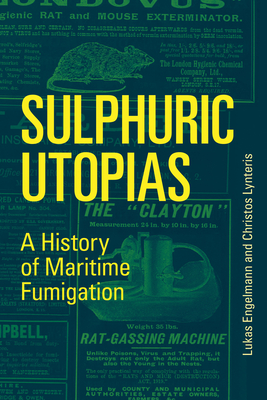
Sulphuric Utopias: A History of Maritime Fumigation
| AUTHOR | Lynteris, Christos; Engelmann, Lukas; Engelmann, Lukas et al. |
| PUBLISHER | MIT Press (03/31/2020) |
| PRODUCT TYPE | Paperback (Paperback) |
In the late nineteenth and early twentieth centuries, fumigation technologies transformed global practices of maritime quarantine through chemical and engineering innovation. One of these technologies, the widely used Clayton machine, blasted sulphuric acid gas through a docked ship in an effort to eliminate pathogens, insects, and rats while leaving the cargo and the structure of the vessel unharmed, shortening its time in quarantine and minimizing the risk of importing infectious diseases. In Sulphuric Utopias, Lukas Engelmann and Christos Lynteris examine this overlooked but historically crucial practice at the intersection of epidemiology, hygiene, applied chemistry, and engineering. They show how maritime fumigation inspired utopian visions of disease-free trade to improve global shipping and to encourage universally applicable standards of sanitation and hygiene.
Engelmann and Lynteris chart the history of ideas about fumigation, disinfection, and quarantine, and chronicle the development of the Clayton machine in 1880s New Orleans. Built by the Louisiana Board of Health and adapted and patented by Thomas Clayton, the machine offered a barrier against bacteria and pests and enabled a highway to global trade. Engelmann and Lynteris chronicle the Clayton machine's success and examine its competitors, including carbon-based fumigation methods in Germany and the Ottoman Empire as well as the "Sulfurozador" in Argentina. They follow the international standardization of maritime fumigation and explore the Clayton machine's decline after World War I, when visions of "sulphuric utopia" were replaced by a pragmatic acknowledgment of epidemiological complexity.
In the late nineteenth and early twentieth centuries, fumigation technologies transformed global practices of maritime quarantine through chemical and engineering innovation. One of these technologies, the widely used Clayton machine, blasted sulphuric acid gas through a docked ship in an effort to eliminate pathogens, insects, and rats while leaving the cargo and the structure of the vessel unharmed, shortening its time in quarantine and minimizing the risk of importing infectious diseases. In Sulphuric Utopias, Lukas Engelmann and Christos Lynteris examine this overlooked but historically crucial practice at the intersection of epidemiology, hygiene, applied chemistry, and engineering. They show how maritime fumigation inspired utopian visions of disease-free trade to improve global shipping and to encourage universally applicable standards of sanitation and hygiene.
Engelmann and Lynteris chart the history of ideas about fumigation, disinfection, and quarantine, and chronicle the development of the Clayton machine in 1880s New Orleans. Built by the Louisiana Board of Health and adapted and patented by Thomas Clayton, the machine offered a barrier against bacteria and pests and enabled a highway to global trade. Engelmann and Lynteris chronicle the Clayton machine's success and examine its competitors, including carbon-based fumigation methods in Germany and the Ottoman Empire as well as the "Sulfurozador" in Argentina. They follow the international standardization of maritime fumigation and explore the Clayton machine's decline after World War I, when visions of "sulphuric utopia" were replaced by a pragmatic acknowledgment of epidemiological complexity.