
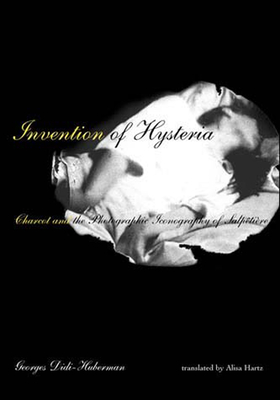
Invention of Hysteria: Charcot and the Photographic Iconography of the Salpêtrière
| AUTHOR | Hartz, Alisa; Didi-Huberman, Georges; Hartz, Alisa et al. |
| PUBLISHER | MIT Press (09/17/2004) |
| PRODUCT TYPE | Paperback (Paperback) |
In this classic of French cultural studies, Georges Didi-Huberman traces the intimate and reciprocal relationship between the disciplines of psychiatry and photography in the late nineteenth century. Focusing on the immense photographic output of the Salpetriere hospital, the notorious Parisian asylum for insane and incurable women, Didi-Huberman shows the crucial role played by photography in the invention of the category of hysteria. Under the direction of the medical teacher and clinician Jean-Martin Charcot, the inmates of Salpetriere identified as hysterics were methodically photographed, providing skeptical colleagues with visual proof of hysteria's specific form. These images, many of which appear in this book, provided the materials for the multivolume album Iconographie photographique de la Salpetriere.
As Didi-Huberman shows, these photographs were far from simply objective documentation. The subjects were required to portray their hysterical "type"--they performed their own hysteria. Bribed by the special status they enjoyed in the purgatory of experimentation and threatened with transfer back to the inferno of the incurables, the women patiently posed for the photographs and submitted to presentations of hysterical attacks before the crowds that gathered for Charcot's "Tuesday Lectures."
Charcot did not stop at voyeuristic observation. Through techniques such as hypnosis, electroshock therapy, and genital manipulation, he instigated the hysterical symptoms in his patients, eventually giving rise to hatred and resistance on their part. Didi-Huberman follows this path from complicity to antipathy in one of Charcot's favorite "cases," that of Augustine, whose image crops up again and again in the Iconographie. Augustine's virtuosic performance of hysteria ultimately became one of self-sacrifice, seen in pictures of ecstasy, crucifixion, and silent cries.
In this classic of French cultural studies, Georges Didi-Huberman traces the intimate and reciprocal relationship between the disciplines of psychiatry and photography in the late nineteenth century. Focusing on the immense photographic output of the Salpetriere hospital, the notorious Parisian asylum for insane and incurable women, Didi-Huberman shows the crucial role played by photography in the invention of the category of hysteria. Under the direction of the medical teacher and clinician Jean-Martin Charcot, the inmates of Salpetriere identified as hysterics were methodically photographed, providing skeptical colleagues with visual proof of hysteria's specific form. These images, many of which appear in this book, provided the materials for the multivolume album Iconographie photographique de la Salpetriere.
As Didi-Huberman shows, these photographs were far from simply objective documentation. The subjects were required to portray their hysterical "type"--they performed their own hysteria. Bribed by the special status they enjoyed in the purgatory of experimentation and threatened with transfer back to the inferno of the incurables, the women patiently posed for the photographs and submitted to presentations of hysterical attacks before the crowds that gathered for Charcot's "Tuesday Lectures."
Charcot did not stop at voyeuristic observation. Through techniques such as hypnosis, electroshock therapy, and genital manipulation, he instigated the hysterical symptoms in his patients, eventually giving rise to hatred and resistance on their part. Didi-Huberman follows this path from complicity to antipathy in one of Charcot's favorite "cases," that of Augustine, whose image crops up again and again in the Iconographie. Augustine's virtuosic performance of hysteria ultimately became one of self-sacrifice, seen in pictures of ecstasy, crucifixion, and silent cries.