
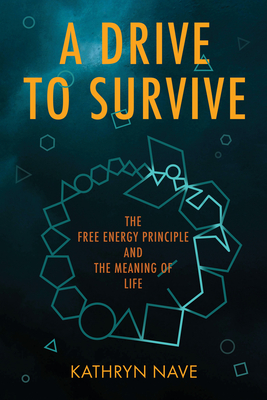
A Drive to Survive: The Free Energy Principle and the Meaning of Life
| AUTHOR | Nave, Kathryn |
| PUBLISHER | MIT Press (02/04/2025) |
| PRODUCT TYPE | Paperback (Paperback) |
Description
How the purposive behavior of living systems outstrips the constraints of the free energy principle. Since 2005, Karl Friston's proposal that the principle of free energy minimization underpins the purposive behavior of living agents has evolved through thousands of publications. This principle's central move is to formalize the drive for self-preservation in terms of a single probabilistic imperative: to survive, a living system must consistently exhibit the same "most likely" pattern of activity over time. Despite the simplicity of this central claim, the free energy principle's complexity and rate of development have previously made it difficult to identify and evaluate. In A Drive to Survive, Kathryn Nave offers an extended critical analysis of the strengths and limitations of Friston's proposal. Nave shows that the free energy principle's capacity to account for the biological origins of purposiveness is undermined by its applicability to any stable inanimate system. As this triviality has become apparent, so advocates have begun to reframe the free energy principle as a means to eliminate, rather than explain, the notion of distinctively biological purposiveness. This, Nave proposes, gets things the wrong way around. The triviality of free energy minimization does not prove that there is no difference in kind between living agents and ordinary machines, but rather it reflects that the framework cannot capture the intrinsic instability and unpredictability that distinguish the former.
Show More
Product Format
Product Details
ISBN-13:
9780262551328
ISBN-10:
0262551322
Binding:
Paperback or Softback (Trade Paperback (Us))
Content Language:
English
More Product Details
Page Count:
318
Carton Quantity:
24
Product Dimensions:
6.16 x 0.90 x 8.89 inches
Weight:
0.85 pound(s)
Feature Codes:
Bibliography,
Index,
Price on Product
Country of Origin:
US
Subject Information
BISAC Categories
Science | Life Sciences - Neuroscience
Science | Philosophy & Social Aspects
Science | Criticism
Dewey Decimal:
153
Library of Congress Control Number:
2024017278
Descriptions, Reviews, Etc.
publisher marketing
How the purposive behavior of living systems outstrips the constraints of the free energy principle. Since 2005, Karl Friston's proposal that the principle of free energy minimization underpins the purposive behavior of living agents has evolved through thousands of publications. This principle's central move is to formalize the drive for self-preservation in terms of a single probabilistic imperative: to survive, a living system must consistently exhibit the same "most likely" pattern of activity over time. Despite the simplicity of this central claim, the free energy principle's complexity and rate of development have previously made it difficult to identify and evaluate. In A Drive to Survive, Kathryn Nave offers an extended critical analysis of the strengths and limitations of Friston's proposal. Nave shows that the free energy principle's capacity to account for the biological origins of purposiveness is undermined by its applicability to any stable inanimate system. As this triviality has become apparent, so advocates have begun to reframe the free energy principle as a means to eliminate, rather than explain, the notion of distinctively biological purposiveness. This, Nave proposes, gets things the wrong way around. The triviality of free energy minimization does not prove that there is no difference in kind between living agents and ordinary machines, but rather it reflects that the framework cannot capture the intrinsic instability and unpredictability that distinguish the former.
Show More
Your Price
$59.40