
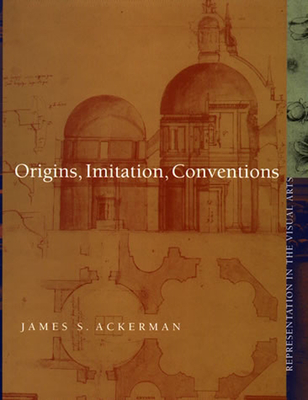
Origins, Imitation, Conventions: Representation in the Visual Arts
| AUTHOR | Ackerman, James S. |
| PUBLISHER | MIT Press (03/19/2024) |
| PRODUCT TYPE | Paperback (Paperback) |
Description
Twelve studies by eminent art historian James S. Ackerman. This collection contains studies written by art historian James Ackerman over the past decade. Whereas Ackerman's earlier work assumed a development of the arts as they responded to social, economic, political, and cultural change, his recent work reflects the poststructural critique of the presumption of progress that characterized Renaissance and modernist history and criticism. In this book he explores the tension between the authority of the past--which may act not only as a restraint but as a challenge and stimulus--and the potentially liberating gift of invention. He examines the ways in which artists and writers on art have related to ancestors and to established modes of representation, as well as to contemporary experiences. The "origins" studied here include the earliest art history and criticism; the beginnings of architectural drawing in the Middle Ages and Renaissance; Leonardo Da Vinci's sketches for churches, the first in the Renaissance to propose supporting domes on sculpted walls and piers; and the first architectural photographs. "Imitation" refers to artistic achievements that in part depended on the imitation of forms established in practices outside the fine arts, such as ancient Roman rhetoric and print media. "Conventions," like language, facilitate communication between the artist and viewer, but are both more universal (understood across cultures) and more fixed (resisting variation that might diminish their clarity). The three categories are closely linked throughout the book, as most acts of representation partake to some degree of all three.
Show More
Product Format
Product Details
ISBN-13:
9780262551519
ISBN-10:
0262551519
Binding:
Paperback or Softback (Trade Paperback (Us))
Content Language:
English
More Product Details
Page Count:
342
Carton Quantity:
13
Product Dimensions:
7.00 x 0.72 x 9.00 inches
Weight:
1.18 pound(s)
Country of Origin:
US
Subject Information
BISAC Categories
Architecture | Criticism
Architecture | History - General
Architecture | History - General
Grade Level:
College Freshman
and up
Dewey Decimal:
701
Descriptions, Reviews, Etc.
publisher marketing
Twelve studies by eminent art historian James S. Ackerman. This collection contains studies written by art historian James Ackerman over the past decade. Whereas Ackerman's earlier work assumed a development of the arts as they responded to social, economic, political, and cultural change, his recent work reflects the poststructural critique of the presumption of progress that characterized Renaissance and modernist history and criticism. In this book he explores the tension between the authority of the past--which may act not only as a restraint but as a challenge and stimulus--and the potentially liberating gift of invention. He examines the ways in which artists and writers on art have related to ancestors and to established modes of representation, as well as to contemporary experiences. The "origins" studied here include the earliest art history and criticism; the beginnings of architectural drawing in the Middle Ages and Renaissance; Leonardo Da Vinci's sketches for churches, the first in the Renaissance to propose supporting domes on sculpted walls and piers; and the first architectural photographs. "Imitation" refers to artistic achievements that in part depended on the imitation of forms established in practices outside the fine arts, such as ancient Roman rhetoric and print media. "Conventions," like language, facilitate communication between the artist and viewer, but are both more universal (understood across cultures) and more fixed (resisting variation that might diminish their clarity). The three categories are closely linked throughout the book, as most acts of representation partake to some degree of all three.
Show More
Your Price
$59.40