
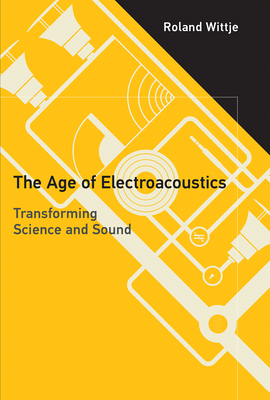
The Age of Electroacoustics: Transforming Science and Sound
| AUTHOR | Wittje, Roland |
| PUBLISHER | MIT Press (02/18/2025) |
| PRODUCT TYPE | Paperback (Paperback) |
Description
The transformation of acoustics into electro-acoustics, a field at the intersection of science and technology, guided by electrical engineering, industry, and the military. At the end of the nineteenth century, acoustics was a science of musical sounds; the musically trained ear was the ultimate reference. Just a few decades into the twentieth century, acoustics had undergone a transformation from a scientific field based on the understanding of classical music to one guided by electrical engineering, with industrial and military applications. In this book, Roland Wittje traces this transition, from the late nineteenth-century work of Hermann Helmholtz to the militarized research of World War I and media technology in the 1930s. Wittje shows that physics in the early twentieth century was not only about relativity and atomic structure but encompassed a range of experimental, applied, and industrial research fields. The emergence of technical acoustics and electroacoustics illustrates a scientific field at the intersection of science and technology. Wittje starts with Helmholtz's and Rayleigh's work and its intersection with telegraphy and early wireless, and continues with the industrialization of acoustics during World War I, when sound measurement was automated and electrical engineering and radio took over the concept of noise. Researchers no longer appealed to the musically trained ear to understand sound but to the thinking and practices of electrical engineering. Finally, Wittje covers the demilitarization of acoustics during the Weimar Republic and its remilitarization at the beginning of the Third Reich. He shows how technical acoustics fit well with the Nazi dismissal of pure science, representing everything that "German Physics" under National Socialism should be: experimental, applied, and relevant to the military.
Show More
Product Format
Product Details
ISBN-13:
9780262554060
ISBN-10:
0262554062
Binding:
Paperback or Softback (Trade Paperback (Us))
Content Language:
English
More Product Details
Page Count:
312
Carton Quantity:
24
Product Dimensions:
6.00 x 0.70 x 9.00 inches
Weight:
1.02 pound(s)
Country of Origin:
US
Subject Information
BISAC Categories
Science | Acoustics & Sound
Science | History
Descriptions, Reviews, Etc.
publisher marketing
The transformation of acoustics into electro-acoustics, a field at the intersection of science and technology, guided by electrical engineering, industry, and the military. At the end of the nineteenth century, acoustics was a science of musical sounds; the musically trained ear was the ultimate reference. Just a few decades into the twentieth century, acoustics had undergone a transformation from a scientific field based on the understanding of classical music to one guided by electrical engineering, with industrial and military applications. In this book, Roland Wittje traces this transition, from the late nineteenth-century work of Hermann Helmholtz to the militarized research of World War I and media technology in the 1930s. Wittje shows that physics in the early twentieth century was not only about relativity and atomic structure but encompassed a range of experimental, applied, and industrial research fields. The emergence of technical acoustics and electroacoustics illustrates a scientific field at the intersection of science and technology. Wittje starts with Helmholtz's and Rayleigh's work and its intersection with telegraphy and early wireless, and continues with the industrialization of acoustics during World War I, when sound measurement was automated and electrical engineering and radio took over the concept of noise. Researchers no longer appealed to the musically trained ear to understand sound but to the thinking and practices of electrical engineering. Finally, Wittje covers the demilitarization of acoustics during the Weimar Republic and its remilitarization at the beginning of the Third Reich. He shows how technical acoustics fit well with the Nazi dismissal of pure science, representing everything that "German Physics" under National Socialism should be: experimental, applied, and relevant to the military.
Show More
Your Price
$39.60