
Back to Search

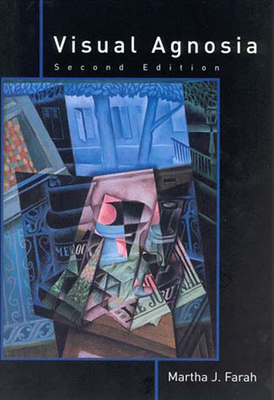
Visual Agnosia

AUTHOR Farah, Martha J.; Farah, Martha J.
PUBLISHER MIT Press (MA) (04/09/2004)
PRODUCT TYPE Paperback (Paperback)

Description
The cognitive neuroscience of human vision draws on two kinds of evidence: functional imaging of normal subjects and the study of neurological patients with visual disorders. Martha Farah's landmark 1990 book Visual Agnosia presented the first comprehensive analysis of disorders of visual recognition within the framework of cognitive neuroscience, and remains the authoritative work on the subject. This long-awaited second edition provides a reorganized and updated review of the visual agnosias, incorporating the latest research on patients with insights from the functional neuroimaging literature. Visual agnosia refers to a multitude of different disorders and syndromes, fascinating in their own right and valuable for what they can tell us about normal human vision. Some patients cannot recognize faces but can still recognize other objects, while others retain only face recognition. Some see only one object at a time; others can see multiple objects but recognize only one at a time. Some do not consciously perceive the orientation of an object but nevertheless reach for it with perfected oriented grasp; others do not consciously recognize a face as familiar but nevertheless respond to it autonomically. Each disorder is illustrated with a clinical vignette, followed by a thorough review of the case report literature and a discussion of the theoretical implications of the disorder for cognitive neuroscience.

The second edition extends the range of disorders covered to include disorders of topographic recognition, and both general and selective disorders of semantic memory, as well as expanded coverage of face recognition impairments. Also included are a discussion of the complementary roles of imaging and patient-based research in cognitive neuroscience, and a final integrative chapter presenting the "big picture" of object recognition as illuminated by agnosia research.

Show More
Product Format
Product Details
ISBN-13: 9780262562034
ISBN-10: 0262562030
Binding: Paperback or Softback (Trade Paperback (Us))
Content Language: English
Edition Number: 0002
More Product Details
Page Count: 192
Carton Quantity: 38
Product Dimensions: 6.02 x 0.44 x 8.94 inches
Weight: 0.63 pound(s)
Feature Codes: Bibliography, Index, Table of Contents, Illustrated
Country of Origin: US
Subject Information
BISAC Categories
Medical | Neuroscience
Medical | Neuropsychology
Medical | Cognitive Psychology & Cognition
Grade Level: College Freshman and up
Dewey Decimal: 616.8
Library of Congress Control Number: 2003059393
Descriptions, Reviews, Etc.
publisher marketing
The cognitive neuroscience of human vision draws on two kinds of evidence: functional imaging of normal subjects and the study of neurological patients with visual disorders. Martha Farah's landmark 1990 book Visual Agnosia presented the first comprehensive analysis of disorders of visual recognition within the framework of cognitive neuroscience, and remains the authoritative work on the subject. This long-awaited second edition provides a reorganized and updated review of the visual agnosias, incorporating the latest research on patients with insights from the functional neuroimaging literature. Visual agnosia refers to a multitude of different disorders and syndromes, fascinating in their own right and valuable for what they can tell us about normal human vision. Some patients cannot recognize faces but can still recognize other objects, while others retain only face recognition. Some see only one object at a time; others can see multiple objects but recognize only one at a time. Some do not consciously perceive the orientation of an object but nevertheless reach for it with perfected oriented grasp; others do not consciously recognize a face as familiar but nevertheless respond to it autonomically. Each disorder is illustrated with a clinical vignette, followed by a thorough review of the case report literature and a discussion of the theoretical implications of the disorder for cognitive neuroscience.

The second edition extends the range of disorders covered to include disorders of topographic recognition, and both general and selective disorders of semantic memory, as well as expanded coverage of face recognition impairments. Also included are a discussion of the complementary roles of imaging and patient-based research in cognitive neuroscience, and a final integrative chapter presenting the "big picture" of object recognition as illuminated by agnosia research.

Show More
Your Price  $34.65
Paperback