
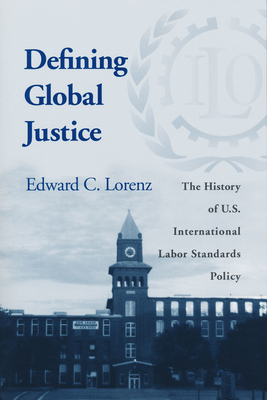
Defining Global Justice: History of Us Int'l Labor Standards Poli
| AUTHOR | Lorenz, Edward C. |
| PUBLISHER | University of Notre Dame Press (10/01/2001) |
| PRODUCT TYPE | Paperback (Paperback) |
Defining Global Justice offers the first comprehensive overview of the history of the United States role in the International Labor Organization (ILO). In this thought-provoking book, Edward Lorenz addresses the challenge laid down by the President of the American Political Science Association in 2000, who urged scholars to discover "how well-structured institutions could enable the world to have 'a new birth of freedom'." Lorenz's study describes one model of a well-structured institution. His history of the U.S. interaction with the ILO shows how some popular organizations, from organized labor through women's, academic, legal, and religious institutions have been able to utilize the ILO structure to counter what the APSA president called "self-serving elites and . . . their worst impulses." These organizations succeeded repeatedly in introducing popular visions of social justice into global economic planning and the world economy.
Lorenz demonstrates the key role played by the social gospel movement, academic elites, women leaders, lawyers, and organized labor in the quest for global justice through labor standards. By underscoring the role of women in this process, he highlights the importance of gender relations in the development of labor standards policy. Lorenz also shows how transformations in the economic and social reproduction of knowledge gradually displaced academics from the cutting edge of research on labor issues.
Throughout this fascinating study, Lorenz reminds his readers that the development of decent labor standards has come in large part from the efforts of religious groups and a host of other nongovernmental, voluntary civic organizations that have insisted labor is a human activity, not a commodity.
Defining Global Justice reveals why the United States, despite showing exceptional restraint in domestic social policy making, played a leading role in the pursuit of just international labor standards. Lorenz's lucid volume covers a century's worth of efforts, charting the development of a body of international law and an institutional structure as important to the global economy of the twenty-first century as the battle against slavery was in the nineteenth century.
Defining Global Justice offers the first comprehensive overview of the history of the United States role in the International Labor Organization (ILO). In this thought-provoking book, Edward Lorenz addresses the challenge laid down by the President of the American Political Science Association in 2000, who urged scholars to discover "how well-structured institutions could enable the world to have 'a new birth of freedom'." Lorenz's study describes one model of a well-structured institution. His history of the U.S. interaction with the ILO shows how some popular organizations, from organized labor through women's, academic, legal, and religious institutions have been able to utilize the ILO structure to counter what the APSA president called "self-serving elites and . . . their worst impulses." These organizations succeeded repeatedly in introducing popular visions of social justice into global economic planning and the world economy.
Lorenz demonstrates the key role played by the social gospel movement, academic elites, women leaders, lawyers, and organized labor in the quest for global justice through labor standards. By underscoring the role of women in this process, he highlights the importance of gender relations in the development of labor standards policy. Lorenz also shows how transformations in the economic and social reproduction of knowledge gradually displaced academics from the cutting edge of research on labor issues.
Throughout this fascinating study, Lorenz reminds his readers that the development of decent labor standards has come in large part from the efforts of religious groups and a host of other nongovernmental, voluntary civic organizations that have insisted labor is a human activity, not a commodity.
Defining Global Justice reveals why the United States, despite showing exceptional restraint in domestic social policy making, played a leading role in the pursuit of just international labor standards. Lorenz's lucid volume covers a century's worth of efforts, charting the development of a body of international law and an institutional structure as important to the global economy of the twenty-first century as the battle against slavery was in the nineteenth century.