
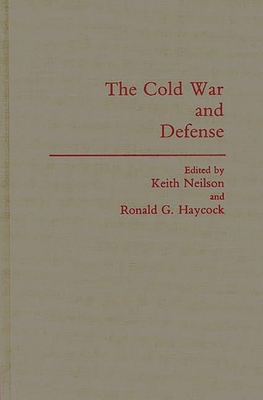
The Cold War and Defense
| PUBLISHER | Praeger (09/30/1990) |
| PRODUCT TYPE | Hardcover (Hardcover) |
Written by an international group of distinguished historians, this volume offers both a more balanced and more particularized approach to the Cold War than has yet been available. The contributors seek to present the Cold War as a historical event, free from the heretofore widespread tendency to blame individuals, countries, and ideologies for what has occurred. They also demonstrate that, contrary to prevailing views of the Cold War as primarily a struggle for supremacy between the two superpowers, the Cold War was not a single phenomenon. Rather, they argue, the Cold War manifested itself in a number of ways, depending upon the country under consideration. While the main protagonists were the United States and the Soviet Union, other nations brought their own histories to the events after World War II, and these experiences influenced the ways in which the Cold War was perceived by and affected each country.
Following an introduction by the editors, the book is divided into chapters which address the Cold War experiences of individual countries and regions--the United States, the Soviet Union, Britain, Canada, Australia, and the Middle East. The contributors show that, in each case, the decisions made after 1945 had a specific and unique context that determined their nature. For example, following the war, the United States was thrust into a position of global predominance, a position it had not previously held. This resulted in changes in the U.S government on a scale not seen since the Civil War. Britain, on the other hand, preferred to focus on the re-establishment of her position as a world power rather than on the narrow issue of European defense considered so important by the Americans. The contributors conclude that the Cold War must be seen not necessarily as a clash of ideologies, but rather as a particular example of what happens at the end of a war when a new balance of power must be established and new relationships forged between states. Their insights into this complex process will be invaluable for advanced undergraduate and graduate students seeking a useful introduction to the myriad facets of the Cold War.Written by an international group of distinguished historians, this volume offers both a more balanced and more particularized approach to the Cold War than has yet been available. The contributors seek to present the Cold War as a historical event, free from the heretofore widespread tendency to blame individuals, countries, and ideologies for what has occurred. They also demonstrate that, contrary to prevailing views of the Cold War as primarily a struggle for supremacy between the two superpowers, the Cold War was not a single phenomenon. Rather, they argue, the Cold War manifested itself in a number of ways, depending upon the country under consideration. While the main protagonists were the United States and the Soviet Union, other nations brought their own histories to the events after World War II, and these experiences influenced the ways in which the Cold War was perceived by and affected each country.
Following an introduction by the editors, the book is divided into chapters which address the Cold War experiences of individual countries and regions--the United States, the Soviet Union, Britain, Canada, Australia, and the Middle East. The contributors show that, in each case, the decisions made after 1945 had a specific and unique context that determined their nature. For example, following the war, the United States was thrust into a position of global predominance, a position it had not previously held. This resulted in changes in the U.S government on a scale not seen since the Civil War. Britain, on the other hand, preferred to focus on the re-establishment of her position as a world power rather than on the narrow issue of European defense considered so important by the Americans. The contributors conclude that the Cold War must be seen not necessarily as a clash of ideologies, but rather as a particular example of what happens at the end of a war when a new balance of power must be established and new relationships forged between states. Their insights into this complex process will be invaluable for advanced undergraduate and graduate students seeking a useful introduction to the myriad facets of the Cold War.