
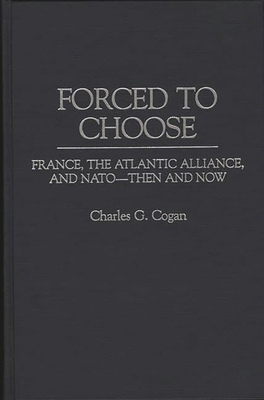
Forced to Choose: France, the Atlantic Alliance, and NATO -- Then and Now
| AUTHOR | Cogan, Charles; Cogan, Charles G. |
| PUBLISHER | Praeger (06/30/1997) |
| PRODUCT TYPE | Hardcover (Hardcover) |
Cogan examines the France-NATO problem, going back to its origins in 1945-1952, when a weak France, obsessed by the threat of Germany and jealous of the ascendancy gained by the British during the war, sought security guarantees and assistance from the United States. However, in the process, France put itself in a position of dependence under the NATO integrated command to a degree that later governments of a resurgent France felt compelled to challenge--and are still doing so today.
Post-World War II France was to disappoint the hopes of such American statesmen as Dean Acheson and George Kennan, who looked to it to take the lead in Western Europe in the face of a growing Soviet threat. Dogged by the humiliation of the wartime occupation, obsessed by fear of a resurgent Germany, jealous of the British ascendancy gained during the war, and dominated by an intellectual class almost wholly given over to the prevailing antifascism (and, therefore, philo-sovietism) of the postwar, France would take 20 years to live up to its promise as the motor of Western Europe. Though it was perhaps inevitable that France, falling on the western divide of the Iron Curtain, would join the U.S. camp, it did so with a loss of sovereignty, symbolized in NATO's integrated command. This was a situation which Charles de Gaulle, after his return to power in 1958, would seek to undo. His successors have continued this quest to this day. Cogan explores the Gaullist argument that the North Atlantic Alliance and NATO are two distinct movements against a background of ever-increasing threats--or perceived threats--by the Soviet Union, culminating in the North Korean invasion of 1950. The French, desperate to emerge from a position of wartime inferiority, willingly abandoned hopes of building a defense of Europe by Europeans alone. France threw itself into the arms of the United States, partly to escape the onerous tutelage of Great Britain. In 1951, when the NATO integrated command was put in place, the French wound up with very little--not even a major subordinate command. Frustration and, ultimately, withdrawal from the NATO military structure were the results. This is a major examination of contemporary international relations and Western European defense policy for scholars and researchers alike.Cogan examines the France-NATO problem, going back to its origins in 1945-1952, when a weak France, obsessed by the threat of Germany and jealous of the ascendancy gained by the British during the war, sought security guarantees and assistance from the United States. However, in the process, France put itself in a position of dependence under the NATO integrated command to a degree that later governments of a resurgent France felt compelled to challenge--and are still doing so today.
Post-World War II France was to disappoint the hopes of such American statesmen as Dean Acheson and George Kennan, who looked to it to take the lead in Western Europe in the face of a growing Soviet threat. Dogged by the humiliation of the wartime occupation, obsessed by fear of a resurgent Germany, jealous of the British ascendancy gained during the war, and dominated by an intellectual class almost wholly given over to the prevailing antifascism (and, therefore, philo-sovietism) of the postwar, France would take 20 years to live up to its promise as the motor of Western Europe. Though it was perhaps inevitable that France, falling on the western divide of the Iron Curtain, would join the U.S. camp, it did so with a loss of sovereignty, symbolized in NATO's integrated command. This was a situation which Charles de Gaulle, after his return to power in 1958, would seek to undo. His successors have continued this quest to this day. Cogan explores the Gaullist argument that the North Atlantic Alliance and NATO are two distinct movements against a background of ever-increasing threats--or perceived threats--by the Soviet Union, culminating in the North Korean invasion of 1950. The French, desperate to emerge from a position of wartime inferiority, willingly abandoned hopes of building a defense of Europe by Europeans alone. France threw itself into the arms of the United States, partly to escape the onerous tutelage of Great Britain. In 1951, when the NATO integrated command was put in place, the French wound up with very little--not even a major subordinate command. Frustration and, ultimately, withdrawal from the NATO military structure were the results. This is a major examination of contemporary international relations and Western European defense policy for scholars and researchers alike.