
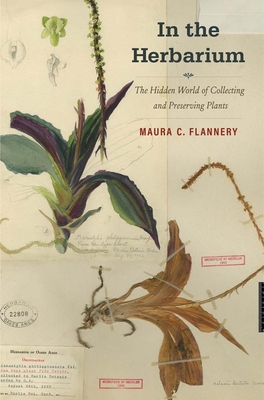
In the Herbarium: The Hidden World of Collecting and Preserving Plants
| AUTHOR | Flannery, Maura C. |
| PUBLISHER | Yale University Press (05/30/2023) |
| PRODUCT TYPE | Hardcover (Hardcover) |
Description
How herbaria illuminate the past and future of plant science "We should treasure herbaria, in biologist Maura Flannery's spirited retelling, not simply because of the stories they tell about plants, but because of the stories they tell about the individuals who assembled them."--Laurence A. Marschall, Natural History Collections of preserved plant specimens, known as herbaria, have existed for nearly five centuries. These pressed and labeled plants have been essential resources for scientists, allowing them to describe and differentiate species and to document and research plant changes and biodiversity over time--including changes related to climate. Maura C. Flannery tells the history of herbaria, from the earliest collections belonging to such advocates of the technique as sixteenth-century botanist Luca Ghini, to the collections of poets, politicians, and painters, and to the digitization of these precious specimens today. She charts the growth of herbaria during the Age of Exploration, the development of classification systems to organize the collections, and herbaria's indispensable role in the tracking of climate change and molecular evolution. Herbaria also have historical, aesthetic, cultural, and ethnobotanical value--these preserved plants can be linked to the Indigenous peoples who used them, the collectors who sought them out, and the scientists who studied them. This book testifies to the central role of herbaria in the history of plant study and to their continued value, not only to biologists but to entirely new users as well: gardeners, artists, students, and citizen-scientists.
Show More
Product Format
Product Details
ISBN-13:
9780300247916
ISBN-10:
0300247915
Binding:
Hardback or Cased Book (Sewn)
Content Language:
English
More Product Details
Page Count:
336
Carton Quantity:
24
Product Dimensions:
6.10 x 1.20 x 9.30 inches
Weight:
1.50 pound(s)
Feature Codes:
Bibliography,
Index,
Price on Product,
Illustrated
Country of Origin:
US
Subject Information
BISAC Categories
Science | History
Science | Life Sciences - Botany
Science | Life Sciences - Taxonomy
Dewey Decimal:
580.74
Library of Congress Control Number:
2022942256
Descriptions, Reviews, Etc.
publisher marketing
How herbaria illuminate the past and future of plant science "We should treasure herbaria, in biologist Maura Flannery's spirited retelling, not simply because of the stories they tell about plants, but because of the stories they tell about the individuals who assembled them."--Laurence A. Marschall, Natural History Collections of preserved plant specimens, known as herbaria, have existed for nearly five centuries. These pressed and labeled plants have been essential resources for scientists, allowing them to describe and differentiate species and to document and research plant changes and biodiversity over time--including changes related to climate. Maura C. Flannery tells the history of herbaria, from the earliest collections belonging to such advocates of the technique as sixteenth-century botanist Luca Ghini, to the collections of poets, politicians, and painters, and to the digitization of these precious specimens today. She charts the growth of herbaria during the Age of Exploration, the development of classification systems to organize the collections, and herbaria's indispensable role in the tracking of climate change and molecular evolution. Herbaria also have historical, aesthetic, cultural, and ethnobotanical value--these preserved plants can be linked to the Indigenous peoples who used them, the collectors who sought them out, and the scientists who studied them. This book testifies to the central role of herbaria in the history of plant study and to their continued value, not only to biologists but to entirely new users as well: gardeners, artists, students, and citizen-scientists.
Show More
List Price $35.00
Your Price
$34.65