
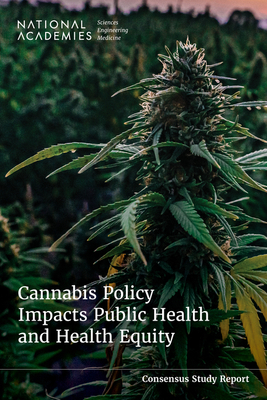
Cannabis Policy Impacts Public Health and Health Equity
| AUTHOR | Board on Population Health and Public Health Practice; National Academies of Sciences Engineering and Medicine; Health and Medicine Division |
| PUBLISHER | National Academies Press (06/26/2025) |
| PRODUCT TYPE | Paperback (Paperback) |
Over the past several decades, more than half of all U.S. states have legalized cannabis for adult and/or medical use, but it remains illegal at the federal level. The public health consequences of cannabis policy changes have not been comprehensively evaluated.
Therefore, the Centers for Disease Control and Prevention and the National Institutes of Health tasked the National Academies with reviewing cannabis and cannabinoid availability in the U.S., assessing regulatory frameworks for the industry with an emphasis on equity, and describing strengths and weaknesses of surveillance systems for cannabis.
The resulting report finds that there's been limited federal guidance to states regarding protecting public health, which has led to inconsistent protection across the states. The report recommends a strategy to minimize public health harms through stronger federal leadership, a robust research agenda, and more.
Over the past several decades, more than half of all U.S. states have legalized cannabis for adult and/or medical use, but it remains illegal at the federal level. The public health consequences of cannabis policy changes have not been comprehensively evaluated.
Therefore, the Centers for Disease Control and Prevention and the National Institutes of Health tasked the National Academies with reviewing cannabis and cannabinoid availability in the U.S., assessing regulatory frameworks for the industry with an emphasis on equity, and describing strengths and weaknesses of surveillance systems for cannabis.
The resulting report finds that there's been limited federal guidance to states regarding protecting public health, which has led to inconsistent protection across the states. The report recommends a strategy to minimize public health harms through stronger federal leadership, a robust research agenda, and more.