
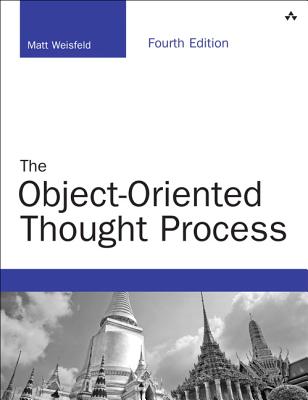
ISBN 9780321861276 is out of print and is currently unavailable, alternate formats (if applicable) are shown below.
Available options are listed below:
Available options are listed below:
The Object-Oriented Thought Process (Out of print)
| AUTHOR | Weisfeld, Matt |
| PUBLISHER | Addison-Wesley Professional (03/13/2013) |
| PRODUCT TYPE | Paperback (Paperback) |
Description
The Object-Oriented Thought Process, Fourth EditionAn introduction to object-oriented concepts for developers looking to master modern application practices
Object-oriented programming (OOP) is the foundation of modern programming languages, including C++, Java, C#, Visual Basic .NET, Ruby, and Objective-C. Objects also form the basis for many web technologies such as JavaScript, Python, and PHP.
It is of vital importance to learn the fundamental concepts of object orientation before starting to use object-oriented development environments. OOP promotes good design practices, code portability, and reuse-but it requires a shift in thinking to be fully understood. Programmers new to OOP should resist the temptation to jump directly into a particular programming language (such as Objective-C, VB .NET, C++, C# .NET, or Java) or a modeling language (such as UML), and instead first take the time to learn what author Matt Weisfeld calls "the object-oriented thought process."
Written by a developer for developers who want to make the leap to object-oriented technologies, The Object-Oriented Thought Process provides a solutions-oriented approach to object-oriented programming. Readers will learn to understand the proper uses of inheritance and composition, the difference between aggregation and association, and the important distinction between interfaces and implementations.
While programming technologies have been changing and evolving over the years, object-oriented concepts remain a constant-no matter what the platform. This revised edition focuses on interoperability across programming technologies, whether you are using objects in traditional application design, in XML-based data transactions, in web page development, in mobile apps, or in any modern programming environment.
"Programmers who aim to create high quality software-as all programmers should-must learn the varied subtleties of the familiar yet not so familiar beasts called objects and classes. Doing so entails careful study of books such as Matt Weisfeld's The Object-Oriented Thought Process." -Bill McCarty, author of Java Distributed Objects, and Object-Oriented Design in Java
Contents at a Glance 1 Introduction to Object-Oriented Concepts
2 How to Think in Terms of Objects
3 Advanced Object-Oriented Concepts
4 The Anatomy of a Class
5 Class Design Guidelines
6 Designing with Objects
7 Mastering Inheritance and Composition
8 Frameworks and Reuse: Designing with Interfaces and Abstract Classes
9 Building Objects and Object-Oriented Design
10 Creating Object Models
11 Objects and Portable Data: XML and JSON
12 Persistent Objects: Serialization, Marshaling, and Relational Databases
13 Objects in Web Services, Mobile Apps, and Hybrids
14 Objects and Client/Server Applications
15 Design Patterns
Object-oriented programming (OOP) is the foundation of modern programming languages, including C++, Java, C#, Visual Basic .NET, Ruby, and Objective-C. Objects also form the basis for many web technologies such as JavaScript, Python, and PHP.
It is of vital importance to learn the fundamental concepts of object orientation before starting to use object-oriented development environments. OOP promotes good design practices, code portability, and reuse-but it requires a shift in thinking to be fully understood. Programmers new to OOP should resist the temptation to jump directly into a particular programming language (such as Objective-C, VB .NET, C++, C# .NET, or Java) or a modeling language (such as UML), and instead first take the time to learn what author Matt Weisfeld calls "the object-oriented thought process."
Written by a developer for developers who want to make the leap to object-oriented technologies, The Object-Oriented Thought Process provides a solutions-oriented approach to object-oriented programming. Readers will learn to understand the proper uses of inheritance and composition, the difference between aggregation and association, and the important distinction between interfaces and implementations.
While programming technologies have been changing and evolving over the years, object-oriented concepts remain a constant-no matter what the platform. This revised edition focuses on interoperability across programming technologies, whether you are using objects in traditional application design, in XML-based data transactions, in web page development, in mobile apps, or in any modern programming environment.
"Programmers who aim to create high quality software-as all programmers should-must learn the varied subtleties of the familiar yet not so familiar beasts called objects and classes. Doing so entails careful study of books such as Matt Weisfeld's The Object-Oriented Thought Process." -Bill McCarty, author of Java Distributed Objects, and Object-Oriented Design in Java
Contents at a Glance 1 Introduction to Object-Oriented Concepts
2 How to Think in Terms of Objects
3 Advanced Object-Oriented Concepts
4 The Anatomy of a Class
5 Class Design Guidelines
6 Designing with Objects
7 Mastering Inheritance and Composition
8 Frameworks and Reuse: Designing with Interfaces and Abstract Classes
9 Building Objects and Object-Oriented Design
10 Creating Object Models
11 Objects and Portable Data: XML and JSON
12 Persistent Objects: Serialization, Marshaling, and Relational Databases
13 Objects in Web Services, Mobile Apps, and Hybrids
14 Objects and Client/Server Applications
15 Design Patterns
Show More
Product Format
Product Details
ISBN-13:
9780321861276
ISBN-10:
0321861272
Binding:
Paperback or Softback (Trade Paperback (Us))
Content Language:
English
Edition Number:
0004
More Product Details
Page Count:
336
Carton Quantity:
24
Product Dimensions:
6.90 x 0.80 x 8.90 inches
Weight:
1.15 pound(s)
Feature Codes:
Bibliography,
Index,
Price on Product,
Illustrated
Country of Origin:
US
Subject Information
BISAC Categories
Computers | Programming - Object Oriented
Dewey Decimal:
005.117
Library of Congress Control Number:
2013007956
Descriptions, Reviews, Etc.
publisher marketing
The Object-Oriented Thought Process, Fourth EditionAn introduction to object-oriented concepts for developers looking to master modern application practices
Object-oriented programming (OOP) is the foundation of modern programming languages, including C++, Java, C#, Visual Basic .NET, Ruby, and Objective-C. Objects also form the basis for many web technologies such as JavaScript, Python, and PHP.
It is of vital importance to learn the fundamental concepts of object orientation before starting to use object-oriented development environments. OOP promotes good design practices, code portability, and reuse-but it requires a shift in thinking to be fully understood. Programmers new to OOP should resist the temptation to jump directly into a particular programming language (such as Objective-C, VB .NET, C++, C# .NET, or Java) or a modeling language (such as UML), and instead first take the time to learn what author Matt Weisfeld calls "the object-oriented thought process."
Written by a developer for developers who want to make the leap to object-oriented technologies, The Object-Oriented Thought Process provides a solutions-oriented approach to object-oriented programming. Readers will learn to understand the proper uses of inheritance and composition, the difference between aggregation and association, and the important distinction between interfaces and implementations.
While programming technologies have been changing and evolving over the years, object-oriented concepts remain a constant-no matter what the platform. This revised edition focuses on interoperability across programming technologies, whether you are using objects in traditional application design, in XML-based data transactions, in web page development, in mobile apps, or in any modern programming environment.
"Programmers who aim to create high quality software-as all programmers should-must learn the varied subtleties of the familiar yet not so familiar beasts called objects and classes. Doing so entails careful study of books such as Matt Weisfeld's The Object-Oriented Thought Process." -Bill McCarty, author of Java Distributed Objects, and Object-Oriented Design in Java
Contents at a Glance 1 Introduction to Object-Oriented Concepts
2 How to Think in Terms of Objects
3 Advanced Object-Oriented Concepts
4 The Anatomy of a Class
5 Class Design Guidelines
6 Designing with Objects
7 Mastering Inheritance and Composition
8 Frameworks and Reuse: Designing with Interfaces and Abstract Classes
9 Building Objects and Object-Oriented Design
10 Creating Object Models
11 Objects and Portable Data: XML and JSON
12 Persistent Objects: Serialization, Marshaling, and Relational Databases
13 Objects in Web Services, Mobile Apps, and Hybrids
14 Objects and Client/Server Applications
15 Design Patterns
Object-oriented programming (OOP) is the foundation of modern programming languages, including C++, Java, C#, Visual Basic .NET, Ruby, and Objective-C. Objects also form the basis for many web technologies such as JavaScript, Python, and PHP.
It is of vital importance to learn the fundamental concepts of object orientation before starting to use object-oriented development environments. OOP promotes good design practices, code portability, and reuse-but it requires a shift in thinking to be fully understood. Programmers new to OOP should resist the temptation to jump directly into a particular programming language (such as Objective-C, VB .NET, C++, C# .NET, or Java) or a modeling language (such as UML), and instead first take the time to learn what author Matt Weisfeld calls "the object-oriented thought process."
Written by a developer for developers who want to make the leap to object-oriented technologies, The Object-Oriented Thought Process provides a solutions-oriented approach to object-oriented programming. Readers will learn to understand the proper uses of inheritance and composition, the difference between aggregation and association, and the important distinction between interfaces and implementations.
While programming technologies have been changing and evolving over the years, object-oriented concepts remain a constant-no matter what the platform. This revised edition focuses on interoperability across programming technologies, whether you are using objects in traditional application design, in XML-based data transactions, in web page development, in mobile apps, or in any modern programming environment.
"Programmers who aim to create high quality software-as all programmers should-must learn the varied subtleties of the familiar yet not so familiar beasts called objects and classes. Doing so entails careful study of books such as Matt Weisfeld's The Object-Oriented Thought Process." -Bill McCarty, author of Java Distributed Objects, and Object-Oriented Design in Java
Contents at a Glance 1 Introduction to Object-Oriented Concepts
2 How to Think in Terms of Objects
3 Advanced Object-Oriented Concepts
4 The Anatomy of a Class
5 Class Design Guidelines
6 Designing with Objects
7 Mastering Inheritance and Composition
8 Frameworks and Reuse: Designing with Interfaces and Abstract Classes
9 Building Objects and Object-Oriented Design
10 Creating Object Models
11 Objects and Portable Data: XML and JSON
12 Persistent Objects: Serialization, Marshaling, and Relational Databases
13 Objects in Web Services, Mobile Apps, and Hybrids
14 Objects and Client/Server Applications
15 Design Patterns
Show More
Author:
Weisfeld, Matt
Matt Weisfeld is an assistant professor at Cuyahoga Community College (Tri-C) in Cleveland, Ohio. Matt is a member of the information technology faculty, teaching programming languages such as C++, Java, and C# .NET. Prior to joining Tri-C, Matt spent 20 years in the information technology industry gaining experience in software development, project management, business development, corporate training, and part-time teaching. Matt holds an M.S. in computer science and an MBA in project management. Besides the first edition of The Object-Oriented Thought Process, Matt has published two other computer books, and more than a dozen articles in magazines and journals such as Dr. Dobb's Journal, The C/C++ Users Journal, Software Development Magazine, Java Report, and the international journal Project Management. Matt has presented at conferences throughout the United States and Canada.
Show More
List Price $44.99
Your Price
$44.54