
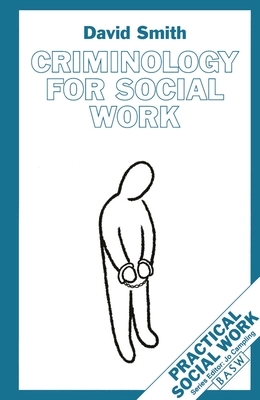
Criminology for Social Work
| AUTHOR | Smith; Smith, David |
| PUBLISHER | Bloomsbury Publishing PLC (03/20/1995) |
| PRODUCT TYPE | Hardcover (Hardcover) |
Description
Criminology for Social Work critically reviews the major strands in criminological theory and research in terms of their implications for social workers in the criminal justice system. While acknowledging the complexity of the links to be made, it argues that they are able to enhance practice by making it more critical and realistic. Individual chapters discuss criminological psychology, the labelling perspective, the concentration of crime and victimisation in particular localities, the contributions of feminist criminology, and the evidence of racism in criminal justice. They also cover the connections between criminology and policy. The conclusion suggests how criminology could be enriched by feminist philosophy and psychology.
Show More
Product Format
Product Details
ISBN-13:
9780333587508
ISBN-10:
0333587502
Binding:
Hardback or Cased Book (Sewn)
Content Language:
English
More Product Details
Page Count:
180
Carton Quantity:
32
Product Dimensions:
5.50 x 0.56 x 8.50 inches
Weight:
0.88 pound(s)
Feature Codes:
Bibliography,
Dust Cover
Country of Origin:
US
Subject Information
BISAC Categories
Social Science | Criminology
Social Science | Social Work
Dewey Decimal:
364
Descriptions, Reviews, Etc.
jacket back
Criminology for Social Work is the first book to try to make explicit the relevance of criminology for social work practice. Drawing on his experience of teaching social work and probation students, and on his own research, the author provides a critical and up-to-date review of the major strands in criminology theory, and suggests how it can be used by social work practitioners in the criminal justice system. The book argues that, while the links between criminological theory and social work practice are sometimes complex, they are nevertheless real, and that criminological insights and research have the potential to take social work with offenders both more critical and more realistic. Individual chapters show the influence on social work of such varied topics as control theory, the labelling perspective, local crime prevention projects, feminism, and racism in criminal justice. A major influence on the book is the work of John Braithwaite, whose theory of reintegrative shaming, it is argued, has implications which social workers ought to heed, both for the processes of criminal justice and for efforts to prevent crime. The conclusion suggests links between this and ideas from feminist psychology and philosophy which offer a powerful critique of traditional conception of justice. This book will prove both useful and challenging to students of social work with offenders and to their teachers. Although offering a guide through the criminological labyrinth, it cannot claim that there are any easy answers to the perennial question: What should we do about crime?
Show More
publisher marketing
Criminology for Social Work critically reviews the major strands in criminological theory and research in terms of their implications for social workers in the criminal justice system. While acknowledging the complexity of the links to be made, it argues that they are able to enhance practice by making it more critical and realistic. Individual chapters discuss criminological psychology, the labelling perspective, the concentration of crime and victimisation in particular localities, the contributions of feminist criminology, and the evidence of racism in criminal justice. They also cover the connections between criminology and policy. The conclusion suggests how criminology could be enriched by feminist philosophy and psychology.
Show More
Your Price
$173.25