
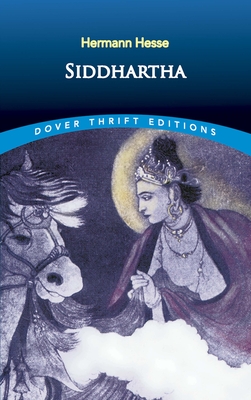
Siddhartha
| AUTHOR | Hesse, Hermann |
| PUBLISHER | Dover Publications (12/23/1998) |
| PRODUCT TYPE | Paperback (Paperback) |
Description
This classic novel of self-discovery has inspired generations of seekers. With parallels to the enlightenment of the Buddha, Hesse's Siddhartha is the story of a young Brahmin's quest for the ultimate reality. His quest takes him from the extremes of indulgent sensuality to the rigors of asceticism and self-denial. At last he learns that wisdom cannot be taught -- it must come from one's own experience and inner struggle. Steeped in the tenets of both psychoanalysis and Eastern mysticism, Siddhartha presents a strikingly original view of man and culture, and the arduous process of self-discovery that leads to reconciliation, harmony, and peace.
Show More
Product Format
Product Details
ISBN-13:
9780486406534
ISBN-10:
0486406539
Binding:
Paperback or Softback (Trade Paperback (Us))
Content Language:
English
More Product Details
Page Count:
112
Carton Quantity:
120
Product Dimensions:
4.90 x 0.30 x 7.80 inches
Weight:
0.20 pound(s)
Feature Codes:
Price on Product,
Table of Contents,
Ikids
Country of Origin:
US
Subject Information
BISAC Categories
Fiction | Classics
Fiction | World Literature - Germany - 20th Century
Fiction | Visionary & Metaphysical
Grade Level:
9th Grade
and up
Accelerated Reader:
Reading Level:
7.1
Point Value:
6
Interest Level:
Upper Grade
Guided Reading Level:
Not Applicable
Dewey Decimal:
FIC
Library of Congress Control Number:
98-31818
Descriptions, Reviews, Etc.
publisher marketing
This classic novel of self-discovery has inspired generations of seekers. With parallels to the enlightenment of the Buddha, Hesse's Siddhartha is the story of a young Brahmin's quest for the ultimate reality. His quest takes him from the extremes of indulgent sensuality to the rigors of asceticism and self-denial. At last he learns that wisdom cannot be taught -- it must come from one's own experience and inner struggle. Steeped in the tenets of both psychoanalysis and Eastern mysticism, Siddhartha presents a strikingly original view of man and culture, and the arduous process of self-discovery that leads to reconciliation, harmony, and peace.
Show More
Author:
Hesse, Hermann
When this German novelist, poet, and essayist publicly denounced the savagery and hatred of World War I, he was considered a traitor. He moved to Switzerland where he eventually became a naturalized citizen. He warned of the advent of World War II, predicting that cultureless efficiency would destroy the modern world. His theme is the conflict between the elements of a person's dual nature and the problem of spiritual loneliness. His first novel, Peter Camenzind, was published in 1904. His masterpiece, Death and the Lover (1930), contrasts a scholarly abbot and his beloved pupil, who leaves the monastery for the adventurous world. Steppenwolf (1927), a European bestseller, was published when defeated Germany had begun to plan for another war. It is the story of Haller, who recognizes in himself the blend of the human and wolfish traits of the completely sterile scholarly project. Hesse won the Nobel Prize in 1946. During the 1960s Hesse became a favorite writer of the counter culture, especially in the United States, though his critical reputation has never equaled his popularity. Hermann Hesse died in 1962.
Show More
List Price $6.00
Your Price
$5.94