
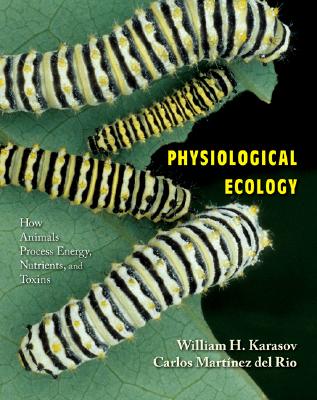
Physiological Ecology: How Animals Process Energy, Nutrients, and Toxins
| AUTHOR | Martnez del Rio, Carlos; Karasov, William H.; Karasov, William et al. |
| PUBLISHER | Princeton University Press (08/05/2007) |
| PRODUCT TYPE | Hardcover (Hardcover) |
Unlocking the puzzle of how animals behave and how they interact with their environments is impossible without understanding the physiological processes that determine their use of food resources. But long overdue is a user-friendly introduction to the subject that systematically bridges the gap between physiology and ecology. Ecologists--for whom such knowledge can help clarify the consequences of global climate change, the biodiversity crisis, and pollution--often find themselves wading through an unwieldy, technically top-heavy literature. Here, William Karasov and Carlos Mart nez del Rio present the first accessible and authoritative one-volume overview of the physiological and biochemical principles that shape how animals procure energy and nutrients and free themselves of toxins--and how this relates to broader ecological phenomena.
After introducing primary concepts, the authors review the chemical ecology of food, and then discuss how animals digest and process food. Their broad view includes symbioses and extends even to ecosystem phenomena such as ecological stochiometry and toxicant biomagnification. They introduce key methods and illustrate principles with wide-ranging vertebrate and invertebrate examples. Uniquely, they also link the physiological mechanisms of resource use with ecological phenomena such as how and why animals choose what they eat and how they participate in the exchange of energy and materials in their biological communities. Thoroughly up-to-date and pointing the way to future research, Physiological Ecology is an essential new source for upper-level undergraduate and graduate students-and an ideal synthesis for professionals.- The most accessible introduction to the physiological and biochemical principles that shape how animals use resources
- Unique in linking the physiological mechanisms of resource use with ecological phenomena
- An essential resource for upper-level undergraduate and graduate students
- An ideal overview for researchers
"This book fills a major gap in the ecological and physiological literature in the most delightful way. An exciting journey into the wondrous mechanical world behind the great diversity of animals on earth, it is an exhaustive overview of everything to do with resource processing and use in animals. From page to page it demonstrates the seamless connection between ecology and physiology. The writing was a joy to read; the authors are in command of the subject and write lucidly about it."--Theunis Piersma, University of Groningen and Royal Netherlands Institute for Sea Research
"Physiological Ecology addresses an important and intriguing topic that has not been adequately summarized previously; there is no corresponding book that discusses resource use at the level presented here. The authors do a masterful and authoritative job of covering both the basics and the details. The numerous and diverse examples and case studies are great, for they illustrate both the concepts and the authors' obvious pleasure in the underlying natural history--part of the fun of this sort of biology."--Joel Kingsolver, University of North Carolina, Chapel Hill
Unlocking the puzzle of how animals behave and how they interact with their environments is impossible without understanding the physiological processes that determine their use of food resources. But long overdue is a user-friendly introduction to the subject that systematically bridges the gap between physiology and ecology. Ecologists--for whom such knowledge can help clarify the consequences of global climate change, the biodiversity crisis, and pollution--often find themselves wading through an unwieldy, technically top-heavy literature. Here, William Karasov and Carlos Mart nez del Rio present the first accessible and authoritative one-volume overview of the physiological and biochemical principles that shape how animals procure energy and nutrients and free themselves of toxins--and how this relates to broader ecological phenomena.
After introducing primary concepts, the authors review the chemical ecology of food, and then discuss how animals digest and process food. Their broad view includes symbioses and extends even to ecosystem phenomena such as ecological stochiometry and toxicant biomagnification. They introduce key methods and illustrate principles with wide-ranging vertebrate and invertebrate examples. Uniquely, they also link the physiological mechanisms of resource use with ecological phenomena such as how and why animals choose what they eat and how they participate in the exchange of energy and materials in their biological communities. Thoroughly up-to-date and pointing the way to future research, Physiological Ecology is an essential new source for upper-level undergraduate and graduate students-and an ideal synthesis for professionals.- The most accessible introduction to the physiological and biochemical principles that shape how animals use resources
- Unique in linking the physiological mechanisms of resource use with ecological phenomena
- An essential resource for upper-level undergraduate and graduate students
- An ideal overview for researchers