
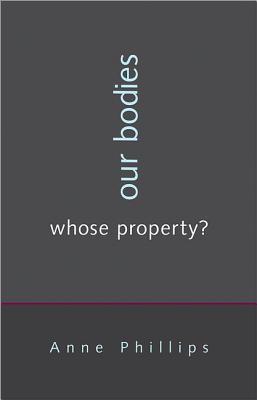
Our Bodies, Whose Property?
| AUTHOR | Phillips, Anne |
| PUBLISHER | Princeton University Press (07/21/2013) |
| PRODUCT TYPE | Hardcover (Hardcover) |
Description
An argument against treating our bodies as commodities
No one wants to be treated like an object, regarded as an item of property, or put up for sale. Yet many people frame personal autonomy in terms of self-ownership, representing themselves as property owners with the right to do as they wish with their bodies. Others do not use the language of property, but are similarly insistent on the rights of free individuals to decide for themselves whether to engage in commercial transactions for sex, reproduction, or organ sales. Drawing on analyses of rape, surrogacy, and markets in human organs, Our Bodies, Whose Property? challenges notions of freedom based on ownership of our bodies and argues against the normalization of markets in bodily services and parts. Anne Phillips explores the risks associated with metaphors of property and the reasons why the commodification of the body remains problematic. What, she asks, is wrong with thinking of oneself as the owner of one's body? What is wrong with making our bodies available for rent or sale? What, if anything, is the difference between markets in sex, reproduction, or human body parts, and the other markets we commonly applaud? Phillips contends that body markets occupy the outer edges of a continuum that is, in some way, a feature of all labor markets. But she also emphasizes that we all have bodies, and considers the implications of this otherwise banal fact for equality. Bodies remind us of shared vulnerability, alerting us to the common experience of living as embodied beings in the same world. Examining the complex issue of body exceptionalism, Our Bodies, Whose Property? demonstrates that treating the body as property makes human equality harder to comprehend.
Show More
Product Format
Product Details
ISBN-13:
9780691150864
ISBN-10:
0691150869
Binding:
Hardback or Cased Book (Unsewn / Adhesive Bound)
Content Language:
English
More Product Details
Page Count:
216
Carton Quantity:
22
Product Dimensions:
5.70 x 0.90 x 8.50 inches
Weight:
0.85 pound(s)
Feature Codes:
Bibliography,
Index,
Dust Cover,
Price on Product,
Table of Contents
Country of Origin:
US
Subject Information
BISAC Categories
Political Science | History & Theory - General
Political Science | Political
Political Science | Women's Studies
Dewey Decimal:
323.44
Library of Congress Control Number:
2012046764
Descriptions, Reviews, Etc.
jacket back
"The topic of this clear and accessible book is timely and important, and the implications of talking about and treating the body as property affect a broad range of policy concerns. A major contribution to debates in both philosophy and public policy, this book should be read by philosophers, political theorists, feminist theorists, bioethicists, and general readers for its theoretical and practical guidance to some of today's thorniest issues."--Mary L. Shanley, Vassar College
Show More
publisher marketing
An argument against treating our bodies as commodities
No one wants to be treated like an object, regarded as an item of property, or put up for sale. Yet many people frame personal autonomy in terms of self-ownership, representing themselves as property owners with the right to do as they wish with their bodies. Others do not use the language of property, but are similarly insistent on the rights of free individuals to decide for themselves whether to engage in commercial transactions for sex, reproduction, or organ sales. Drawing on analyses of rape, surrogacy, and markets in human organs, Our Bodies, Whose Property? challenges notions of freedom based on ownership of our bodies and argues against the normalization of markets in bodily services and parts. Anne Phillips explores the risks associated with metaphors of property and the reasons why the commodification of the body remains problematic. What, she asks, is wrong with thinking of oneself as the owner of one's body? What is wrong with making our bodies available for rent or sale? What, if anything, is the difference between markets in sex, reproduction, or human body parts, and the other markets we commonly applaud? Phillips contends that body markets occupy the outer edges of a continuum that is, in some way, a feature of all labor markets. But she also emphasizes that we all have bodies, and considers the implications of this otherwise banal fact for equality. Bodies remind us of shared vulnerability, alerting us to the common experience of living as embodied beings in the same world. Examining the complex issue of body exceptionalism, Our Bodies, Whose Property? demonstrates that treating the body as property makes human equality harder to comprehend.
Show More
Your Price
$36.63