
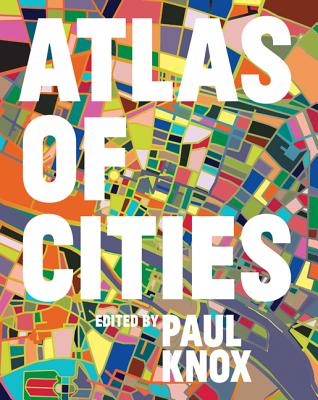
Atlas of Cities
| PUBLISHER | Princeton University Press (08/24/2014) |
| PRODUCT TYPE | Hardcover (Hardcover) |
A unique, stunningly illustrated look at the origins, development, and future prospects of cities
More than half the world's population lives in cities, and that proportion is expected to rise to three-quarters by 2050. Urbanization is a global phenomenon, but the way cities are developing, the experience of city life, and the prospects for the future of cities vary widely from region to region. The Atlas of Cities presents a unique taxonomy of cities that looks at different aspects of their physical, economic, social, and political structures; their interactions with each other and with their hinterlands; the challenges and opportunities they present; and where cities might be going in the future. Each chapter explores a particular type of city--from the foundational cities of Greece and Rome and the networked cities of the Hanseatic League, through the nineteenth-century modernization of Paris and the industrialization of Manchester, to the green and "smart" cities of today. Expert contributors explore how the development of these cities reflects one or more of the common themes of urban development: the mobilizing function (transport, communication, and infrastructure); the generative function (innovation and technology); the decision-making capacity (governance, economics, and institutions); and the transformative capacity (society, lifestyle, and culture). Using stunning info-graphics, maps, charts, tables, and photographs, the Atlas of Cities is a comprehensive overview of the patterns of production, consumption, generation, and decay of the twenty-first century's defining form.- Presents a one-of-a-kind taxonomy of cities that looks at their origins, development, and future prospects
- Features core case studies of particular types of cities, from the foundational cities of Greece and Rome to the "smart" cities of today
- Explores common themes of urban development, from transport and communication to lifestyle and culture
- Includes stunning info-graphics, maps, charts, tables, and photos
Cities Featured:
Abuja, Alexandria, Amsterdam, Athens, Augsburg, Babylon, Beijing, Berlin, Brasilia, Bruges, Budapest, Cairo, Canberra, Chandigarh, Chicago, Constantinople, Curitiba, Detroit, Dubai, Dublin, Dsseldorf, Florence, Frankfurt, Freiburg, Geneva, Ghent, Glasgow, Gssing, Hong Kong, Innsbruck, Istanbul, Jakarta, Karachi, Knossos, Las Vegas, London, Los Angeles, Lbeck, Manchester, Marseille, Masdar City, Mexico City, Miami, Milan, Mumba, Mumbai, Nairobi, New York, Paris, Pella, Portland, Rome, San Francisco, Santorini, So Paulo, Seoul, Shanghai, Sheffield, Singapore, Sparta, St. Petersburg, Stockholm, Sydney, Syracuse, Tokyo, Vancouver, Venice, Vienna, Washington, D.C., Wildpoldsried"This is an atlas with a difference. It broaches the complexity of the urban experience directly and in a beautifully persuasive graphical way, showing how this great variety of city types and features can be explained both chronologically and geographically. A wonderful book of new insights about how our contemporary cities have evolved."--Michael Batty, author of The New Science of Cities
"The Atlas of Cities is a major contribution to our understanding of the place of cities in today's world. This is a new type of map. It does what words alone cannot do; it makes visible the thick patterns that are cutting across old divides."--Saskia Sassen, Columbia University and author of Expulsions: Brutality and Complexity in the Global Economy
"This vibrant book provides an exciting and insightful tour of the cities that are shaping humanity's future; every would-be urbanist can learn something from this volume."--Edward Glaeser, author of Triumph of the City: How Our Greatest Invention Makes Us Richer, Smarter, Greener, Healthier, and Happier
"'Form follows function' was the watchword of twentieth-century modernists but, as the Atlas of Cities deftly shows, the concept has undergirded city building from the start. From imperial Rome and industrial Manchester to today's Asian megacities and border-transcending anomalies like Miami and Dubai, Paul Knox and his talented team of scholars read each city's meaning through its built environment. Packed with info-graphics that are often quirky but always relevant, reading the Atlas of Cities is like walking through the world's great metropolises--something new to ponder around every corner."--Daniel Brook, author of A History of Future Cities
"The Atlas of Cities is an exhaustive and visually captivating field guide to the past history, present tensions, and future transformation of our planet by humanity's city builders."--Anthony M. Townsend, author of Smart Cities: Big Data, Civic Hackers, and the Quest for a New Utopia
A unique, stunningly illustrated look at the origins, development, and future prospects of cities
More than half the world's population lives in cities, and that proportion is expected to rise to three-quarters by 2050. Urbanization is a global phenomenon, but the way cities are developing, the experience of city life, and the prospects for the future of cities vary widely from region to region. The Atlas of Cities presents a unique taxonomy of cities that looks at different aspects of their physical, economic, social, and political structures; their interactions with each other and with their hinterlands; the challenges and opportunities they present; and where cities might be going in the future. Each chapter explores a particular type of city--from the foundational cities of Greece and Rome and the networked cities of the Hanseatic League, through the nineteenth-century modernization of Paris and the industrialization of Manchester, to the green and "smart" cities of today. Expert contributors explore how the development of these cities reflects one or more of the common themes of urban development: the mobilizing function (transport, communication, and infrastructure); the generative function (innovation and technology); the decision-making capacity (governance, economics, and institutions); and the transformative capacity (society, lifestyle, and culture). Using stunning info-graphics, maps, charts, tables, and photographs, the Atlas of Cities is a comprehensive overview of the patterns of production, consumption, generation, and decay of the twenty-first century's defining form.- Presents a one-of-a-kind taxonomy of cities that looks at their origins, development, and future prospects
- Features core case studies of particular types of cities, from the foundational cities of Greece and Rome to the "smart" cities of today
- Explores common themes of urban development, from transport and communication to lifestyle and culture
- Includes stunning info-graphics, maps, charts, tables, and photos
Cities Featured:
Abuja, Alexandria, Amsterdam, Athens, Augsburg, Babylon, Beijing, Berlin, Brasilia, Bruges, Budapest, Cairo, Canberra, Chandigarh, Chicago, Constantinople, Curitiba, Detroit, Dubai, Dublin, Dsseldorf, Florence, Frankfurt, Freiburg, Geneva, Ghent, Glasgow, Gssing, Hong Kong, Innsbruck, Istanbul, Jakarta, Karachi, Knossos, Las Vegas, London, Los Angeles, Lbeck, Manchester, Marseille, Masdar City, Mexico City, Miami, Milan, Mumba, Mumbai, Nairobi, New York, Paris, Pella, Portland, Rome, San Francisco, Santorini, So Paulo, Seoul, Shanghai, Sheffield, Singapore, Sparta, St. Petersburg, Stockholm, Sydney, Syracuse, Tokyo, Vancouver, Venice, Vienna, Washington, D.C., Wildpoldsried