
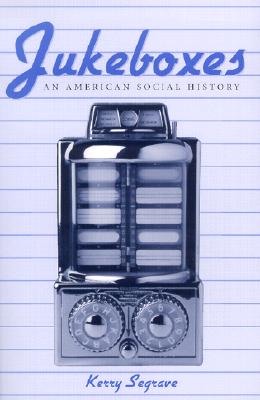
Jukeboxes: An American Social History
| AUTHOR | Segrave, Kerry |
| PUBLISHER | McFarland & Company (02/25/2002) |
| PRODUCT TYPE | Paperback (Paperback) |
This work traces the history of the jukebox from its origins in the invention of the phonograph by Thomas Alva Edison in the 1880s up to its relative modern obscurity. The jukebox's first twenty years were essentially experimental because of the low technical quality and other limitations. It then practically disappeared for a quarter-century, beaten out by the player piano as the coin-operated music machine of choice. But then, new and improved, it reemerged and quickly spread in popularity across America, largely as a result of the repeal of Prohibition and the increased number of bars around the nation. Other socially important elements of the jukebox's development are also covered: it played patriotic tunes during wartime and, located in youth centers, entertained young people and kept them out of "trouble." The industry's one last fling due to a healthy export trade is also covered, and the book rounds out with the decline in the 1950s and the fadeout into obscurity. Richly illustrated.
This work traces the history of the jukebox from its origins in the invention of the phonograph by Thomas Alva Edison in the 1880s up to its relative modern obscurity. The jukebox's first twenty years were essentially experimental because of the low technical quality and other limitations. It then practically disappeared for a quarter-century, beaten out by the player piano as the coin-operated music machine of choice. But then, new and improved, it reemerged and quickly spread in popularity across America, largely as a result of the repeal of Prohibition and the increased number of bars around the nation. Other socially important elements of the jukebox's development are also covered: it played patriotic tunes during wartime and, located in youth centers, entertained young people and kept them out of "trouble." The industry's one last fling due to a healthy export trade is also covered, and the book rounds out with the decline in the 1950s and the fadeout into obscurity. Richly illustrated.