
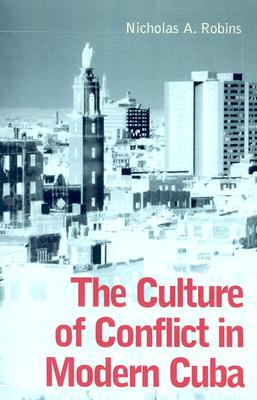
The Culture of Conflict in Modern Cuba
| AUTHOR | Robins, Nicholas A. |
| PUBLISHER | McFarland & Company (02/14/2003) |
| PRODUCT TYPE | Paperback (Paperback) |
Conflict in Cuba is not new. Since early in the Caribbean nation's colonial history a small elite has used centralized power to rule for what they viewed as the common good. Officials often created monopolies which limited accountability, social mobility, fair play and economic development. This work traces this ethos, efforts to change it, and its manifestations in present-day Cuba.
The first of seven chapters discusses the history of Cuba's government and economy, and the ongoing conflict of monism and pluralism. Several chapters then detail the insights the author gained through his work in the country: Cubans are only too aware that, with very few exceptions, they have long been under one form of tyranny or another; they hate their chains but fear to lose them; Cubans and their friends and enemies both want and fear a pluralistic Cuba; and Cubans understand that though Cuban rightists in the United States hate Castro, they share many of his principles and methods. In a final chapter, the work explores various possibilities that the future may hold for the island.
Conflict in Cuba is not new. Since early in the Caribbean nation's colonial history a small elite has used centralized power to rule for what they viewed as the common good. Officials often created monopolies which limited accountability, social mobility, fair play and economic development. This work traces this ethos, efforts to change it, and its manifestations in present-day Cuba.
The first of seven chapters discusses the history of Cuba's government and economy, and the ongoing conflict of monism and pluralism. Several chapters then detail the insights the author gained through his work in the country: Cubans are only too aware that, with very few exceptions, they have long been under one form of tyranny or another; they hate their chains but fear to lose them; Cubans and their friends and enemies both want and fear a pluralistic Cuba; and Cubans understand that though Cuban rightists in the United States hate Castro, they share many of his principles and methods. In a final chapter, the work explores various possibilities that the future may hold for the island.