
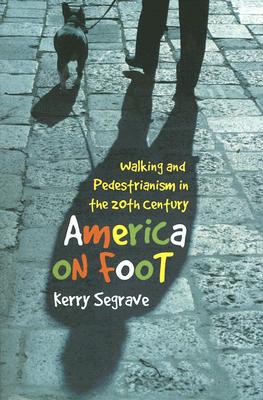
America on Foot: Walking and Pedestrianism in the 20th Century
| AUTHOR | Segrave, Kerry |
| PUBLISHER | McFarland & Company (03/15/2006) |
| PRODUCT TYPE | Paperback (Paperback) |
Hippocrates, one of history's earliest known physicians, once asserted, "Walking is man's best medicine." Over the last three centuries, people have endorsed walking for a variety of reasons--health among them. Before the 1700s, people walked as an essential part of their lifestyle. With the coming of the transportation revolution--and the advent of such conveyances as horse-drawn coaches, railways and automobiles--walking became something that was done increasingly out of choice rather than necessity. England's fashionable society engaged in afternoon promenades as a stylish fad. While America's vast distances and sparse settlements made this activity impractical, Americans nevertheless took to walking in other ways, including engaging in long distance walking competitions complete with spectators and prize money. Thus, for most of the twentieth century, the activity of walking was much more than a means of transportation.
Beginning with the history of walking as a social activity, the book discusses the various issues which have affected walkers, including increased automobile traffic, the attention of the marketing industry and pedestrian regulations. The work examines the contemplative, psychological and observational qualities of walking as well as famous personalities--including Leonardo da Vinci, William Shakespeare, John Keats and John James Audubon--who endorsed these intellectual qualifications. During the 1970s fitness boom, walking was reinvented yet again, becoming an activity of numbers and equations as participants fought to maximize health benefits. The book concludes with a legal analysis of pedestrianism as it relates to sharing space with the automobile.
Hippocrates, one of history's earliest known physicians, once asserted, "Walking is man's best medicine." Over the last three centuries, people have endorsed walking for a variety of reasons--health among them. Before the 1700s, people walked as an essential part of their lifestyle. With the coming of the transportation revolution--and the advent of such conveyances as horse-drawn coaches, railways and automobiles--walking became something that was done increasingly out of choice rather than necessity. England's fashionable society engaged in afternoon promenades as a stylish fad. While America's vast distances and sparse settlements made this activity impractical, Americans nevertheless took to walking in other ways, including engaging in long distance walking competitions complete with spectators and prize money. Thus, for most of the twentieth century, the activity of walking was much more than a means of transportation.
Beginning with the history of walking as a social activity, the book discusses the various issues which have affected walkers, including increased automobile traffic, the attention of the marketing industry and pedestrian regulations. The work examines the contemplative, psychological and observational qualities of walking as well as famous personalities--including Leonardo da Vinci, William Shakespeare, John Keats and John James Audubon--who endorsed these intellectual qualifications. During the 1970s fitness boom, walking was reinvented yet again, becoming an activity of numbers and equations as participants fought to maximize health benefits. The book concludes with a legal analysis of pedestrianism as it relates to sharing space with the automobile.