
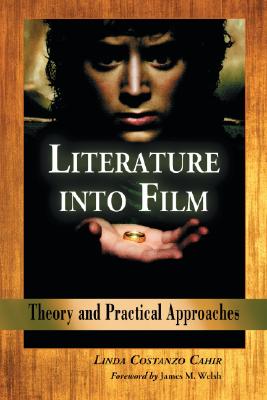
Literature into Film: Theory and Practical Approaches
| AUTHOR | Cahir, Linda Costanza; Cahir, Linda Costanza; Cahir, Linda Costanza et al. |
| PUBLISHER | McFarland & Company (04/04/2006) |
| PRODUCT TYPE | Paperback (Paperback) |
For most people, film adaptation of literature can be summed up in one sentence: "The movie wasn't as good as the book." This volume undertakes to show the reader that not only is this evaluation not always true but sometimes it is intrinsically unfair. Movies based on literary works, while often billed as adaptations, are more correctly termed translations. A director and his actors translate the story from the written page into a visual presentation. Depending on the form of the original text and the chosen method of translation, certain inherent difficulties and pitfalls are associated with this change of medium. So often our reception of a book-based movie has more to do with our expectations and reading of the literature than with the job that the movie production did or did not do. Avoiding these biases and fairly evaluating any particular literary-based film takes an awareness of certain factors.
Written with a formalistic rather than historical approach, this work presents a comprehensive guide to literature-based films, establishing a contextual and theoretical basis to help the reader understand the relationships between such movies and the original texts as well as the reader's own individual responses to these productions. To this end, it focuses on recognizing and appreciating the inherent difficulties encountered when basing a film on a literary work, be it a novel, novella, play or short story. Individual chapters deal with the specific issues and difficulties raised by each of these genres, providing an overview backed up by case studies of specific film translations. Films and literary works receiving this treatment include The Unbearable Lightness of Being, The Manchurian Candidate (1962), Lady Windemere's Fan by Oscar Wilde and Shakespeare's Henry V. Interspersed throughout the text are suggestions for activities the film student or buff can use to enhance his or her appreciation and understanding of the films.
Instructors considering this book for use in a course may request an examination copy here.
For most people, film adaptation of literature can be summed up in one sentence: "The movie wasn't as good as the book." This volume undertakes to show the reader that not only is this evaluation not always true but sometimes it is intrinsically unfair. Movies based on literary works, while often billed as adaptations, are more correctly termed translations. A director and his actors translate the story from the written page into a visual presentation. Depending on the form of the original text and the chosen method of translation, certain inherent difficulties and pitfalls are associated with this change of medium. So often our reception of a book-based movie has more to do with our expectations and reading of the literature than with the job that the movie production did or did not do. Avoiding these biases and fairly evaluating any particular literary-based film takes an awareness of certain factors.
Written with a formalistic rather than historical approach, this work presents a comprehensive guide to literature-based films, establishing a contextual and theoretical basis to help the reader understand the relationships between such movies and the original texts as well as the reader's own individual responses to these productions. To this end, it focuses on recognizing and appreciating the inherent difficulties encountered when basing a film on a literary work, be it a novel, novella, play or short story. Individual chapters deal with the specific issues and difficulties raised by each of these genres, providing an overview backed up by case studies of specific film translations. Films and literary works receiving this treatment include The Unbearable Lightness of Being, The Manchurian Candidate (1962), Lady Windemere's Fan by Oscar Wilde and Shakespeare's Henry V. Interspersed throughout the text are suggestions for activities the film student or buff can use to enhance his or her appreciation and understanding of the films.
Instructors considering this book for use in a course may request an examination copy here.