
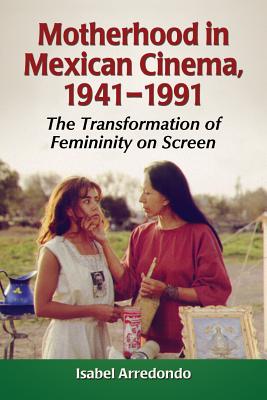
Motherhood in Mexican Cinema, 1941-1991: The Transformation of Femininity on Screen
| AUTHOR | Arredondo, Isabel |
| PUBLISHER | McFarland & Company (11/19/2013) |
| PRODUCT TYPE | Paperback (Paperback) |
How were femininity and motherhood understood in Mexican cinema from the 1940s to the early 1990s? Film analysis, interviews with filmmakers, academic articles and film reviews from newspapers are used to answer the question and trace the changes in such depictions. Images of mothers in films by so-called third-wave filmmakers (Busi Cortes, Maria Novaro, Dana Rotberg and Marisa Sistach) are contrasted with those in Mexican classical films (1935-1950) and films from the 1970s and 1980s.
There are some surprising conclusions. The most important restrictions in the depiction of mothers in classical cinema came not from the strict sexual norms of the 1940s but in reactions to women shown as having autonomous identities. Also, in contrast to classical films, third-wave films show a woman's problems within a social dimension, making motherhood political--in relation not to militancy within the left but to women's issues.
Third-wave films approach the problems of Latin American society as those of individuals differentiated by gender, sexuality and ethnicity; in such films mothers are citizens directly affected by laws, economic policies and cultural beliefs.
How were femininity and motherhood understood in Mexican cinema from the 1940s to the early 1990s? Film analysis, interviews with filmmakers, academic articles and film reviews from newspapers are used to answer the question and trace the changes in such depictions. Images of mothers in films by so-called third-wave filmmakers (Busi Cortes, Maria Novaro, Dana Rotberg and Marisa Sistach) are contrasted with those in Mexican classical films (1935-1950) and films from the 1970s and 1980s.
There are some surprising conclusions. The most important restrictions in the depiction of mothers in classical cinema came not from the strict sexual norms of the 1940s but in reactions to women shown as having autonomous identities. Also, in contrast to classical films, third-wave films show a woman's problems within a social dimension, making motherhood political--in relation not to militancy within the left but to women's issues.
Third-wave films approach the problems of Latin American society as those of individuals differentiated by gender, sexuality and ethnicity; in such films mothers are citizens directly affected by laws, economic policies and cultural beliefs.