
Just Another Car Factory?
| AUTHOR | Huxley, Christopher; Robertson, David; Robertson, David et al. |
| PUBLISHER | ILR Press (07/10/1997) |
| PRODUCT TYPE | Hardcover (Hardcover) |
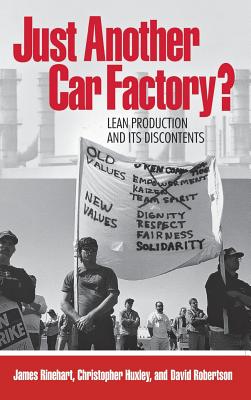
This study of CAMI Automotive, a unionized joint venture between General Motors and Suzuki, is the most comprehensive ever undertaken of a lean production plant. James Rinehart, Christopher Huxley, and David Robertson address a topic that has inspired fierce debate in industrial relations, sociology, labor studies, and human resource management. Heralded as a model of lean production when it opened in 1989, CAMI promised workers something different from traditional plants--a humane environment, empowerment, and cooperative labor-management relations. However, the enthusiasm workers felt during the orientation and early phases of production steadily declined, as did their involvement in participatory activities. Workers came to describe CAMI as "just another car factory." Union challenges and shopfloor resistance to key elements of the lean system grew, capped by a five-week strike in 1992. The authors attribute workers' disillusionment to lean production itself rather than to North American managers' inadequate implementation.
This study of CAMI Automotive, a unionized joint venture between General Motors and Suzuki, is the most comprehensive ever undertaken of a lean production plant. James Rinehart, Christopher Huxley, and David Robertson address a topic that has inspired fierce debate in industrial relations, sociology, labor studies, and human resource management. Heralded as a model of lean production when it opened in 1989, CAMI promised workers something different from traditional plants--a humane environment, empowerment, and cooperative labor-management relations. However, the enthusiasm workers felt during the orientation and early phases of production steadily declined, as did their involvement in participatory activities. Workers came to describe CAMI as "just another car factory." Union challenges and shopfloor resistance to key elements of the lean system grew, capped by a five-week strike in 1992. The authors attribute workers' disillusionment to lean production itself rather than to North American managers' inadequate implementation.