
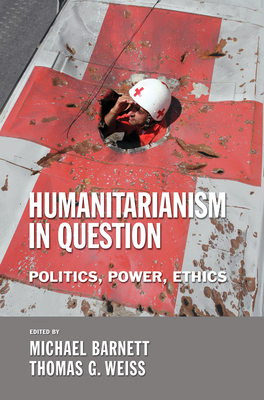
Humanitarianism in Question
| PUBLISHER | Cornell University Press (04/15/2008) |
| PRODUCT TYPE | Hardcover (Hardcover) |
Years of tremendous growth in response to complex emergencies have left a mark on the humanitarian sector. Various matters that once seemed settled are now subjects of intense debate. What is humanitarianism? Is it limited to the provision of relief to victims of conflict, or does it include broader objectives such as human rights, democracy promotion, development, and peacebuilding?
For much of the last century, the principles of humanitarianism were guided by neutrality, impartiality, and independence. More recently, some humanitarian organizations have begun to relax these tenets. The recognition that humanitarian action can lead to negative consequences has forced humanitarian organizations to measure their effectiveness, to reflect on their ethical positions, and to consider not only the values that motivate their actions but also the consequences of those actions.
In the indispensable Humanitarianism in Question, Michael Barnett and Thomas G. Weiss bring together scholars from a variety of disciplines to address the humanitarian identity crisis, including humanitarianism's relationship to accountability, great powers, privatization and corporate philanthropy, warlords, and the ethical evaluations that inform life-and-death decision making during and after emergencies.
Contributors: Michael Barnett, University of Minnesota; Craig Calhoun, New York University; James D. Fearon, Stanford University; Laura Hammond, SOAS, University of London; Peter J. Hoffman, Hunter College; Stephen Hopgood, SOAS, University of London; Peter Redfield, University of North Carolina, Chapel Hill; Jennifer C. Rubenstein, Princeton University; Jack Snyder, Columbia University; Janice Gross Stein, University of Toronto; Thomas G. Weiss, CUNY Graduate Center
Years of tremendous growth in response to complex emergencies have left a mark on the humanitarian sector. Various matters that once seemed settled are now subjects of intense debate. What is humanitarianism? Is it limited to the provision of relief to victims of conflict, or does it include broader objectives such as human rights, democracy promotion, development, and peacebuilding?
For much of the last century, the principles of humanitarianism were guided by neutrality, impartiality, and independence. More recently, some humanitarian organizations have begun to relax these tenets. The recognition that humanitarian action can lead to negative consequences has forced humanitarian organizations to measure their effectiveness, to reflect on their ethical positions, and to consider not only the values that motivate their actions but also the consequences of those actions.
In the indispensable Humanitarianism in Question, Michael Barnett and Thomas G. Weiss bring together scholars from a variety of disciplines to address the humanitarian identity crisis, including humanitarianism's relationship to accountability, great powers, privatization and corporate philanthropy, warlords, and the ethical evaluations that inform life-and-death decision making during and after emergencies.
Contributors: Michael Barnett, University of Minnesota; Craig Calhoun, New York University; James D. Fearon, Stanford University; Laura Hammond, SOAS, University of London; Peter J. Hoffman, Hunter College; Stephen Hopgood, SOAS, University of London; Peter Redfield, University of North Carolina, Chapel Hill; Jennifer C. Rubenstein, Princeton University; Jack Snyder, Columbia University; Janice Gross Stein, University of Toronto; Thomas G. Weiss, CUNY Graduate Center