
Available options are listed below:
Biological Systematics: Principles and Applications (Out of print)
| AUTHOR | Brower, Andrew V. Z.; Schuh, Randall T. |
| PUBLISHER | Comstock Publishing (07/30/2009) |
| PRODUCT TYPE | Hardcover (Hardcover) |
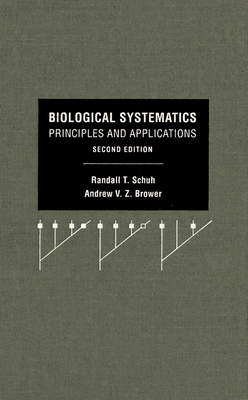
Biological Systematics: Principles and Applications draws equally from examples in botany and zoology to provide a modern account of cladistic principles and techniques. It is a core systematics textbook with a focus on parsimony-based approaches for students and biologists interested in systematics and comparative biology. Randall T. Schuh and Andrew V. Z. Brower cover:
-the history and philosophy of systematics and nomenclature;
-the mechanics and methods of analysis and evaluation of results;
-the practical applications of results and wider relevance within biological classification, biogeography, adaptation and coevolution, biodiversity, and conservation; and
-software applications.
This new and thoroughly revised edition reflects the exponential growth in the use of DNA sequence data in systematics. New data techniques and a notable increase in the number of examples from molecular systematics will be of interest to students increasingly involved in molecular and genetic work.
Biological Systematics: Principles and Applications draws equally from examples in botany and zoology to provide a modern account of cladistic principles and techniques. It is a core systematics textbook with a focus on parsimony-based approaches for students and biologists interested in systematics and comparative biology. Randall T. Schuh and Andrew V. Z. Brower cover:
-the history and philosophy of systematics and nomenclature;
-the mechanics and methods of analysis and evaluation of results;
-the practical applications of results and wider relevance within biological classification, biogeography, adaptation and coevolution, biodiversity, and conservation; and
-software applications.
This new and thoroughly revised edition reflects the exponential growth in the use of DNA sequence data in systematics. New data techniques and a notable increase in the number of examples from molecular systematics will be of interest to students increasingly involved in molecular and genetic work.