
Mere Equals
| AUTHOR | McMahon, Lucia |
| PUBLISHER | Cornell University Press (09/15/2012) |
| PRODUCT TYPE | Hardcover (Hardcover) |
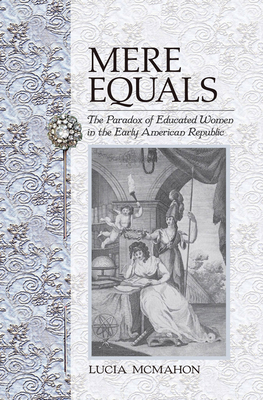
In Mere Equals, Lucia McMahon narrates a story about how a generation of young women who enjoyed access to new educational opportunities made sense of their individual and social identities in an American nation marked by stark political inequality between the sexes. McMahon's archival research into the private documents of middling and well-to-do Americans in northern states illuminates educated women's experiences with particular life stages and relationship arcs: friendship, family, courtship, marriage, and motherhood. In their personal and social relationships, educated women attempted to live as the "mere equals" of men. Their often frustrated efforts reveal how early national Americans grappled with the competing issues of women's intellectual equality and sexual difference.
In the new nation, a pioneering society, pushing westward and unmooring itself from established institutions, often enlisted women's labor outside the home and in areas that we would deem public. Yet, as a matter of law, women lacked most rights of citizenship and this subordination was authorized by an ideology of sexual difference. What women and men said about education, how they valued it, and how they used it to place themselves and others within social hierarchies is a highly useful way to understand the ongoing negotiation between equality and difference. In public documents, "difference" overwhelmed "equality," because the formal exclusion of women from political activity and from economic parity required justification. McMahon tracks the ways in which this public disparity took hold in private communications. By the 1830s, separate and gendered spheres were firmly in place. This was the social and political heritage with which women's rights activists would contend for the rest of the century.
In Mere Equals, Lucia McMahon narrates a story about how a generation of young women who enjoyed access to new educational opportunities made sense of their individual and social identities in an American nation marked by stark political inequality between the sexes. McMahon's archival research into the private documents of middling and well-to-do Americans in northern states illuminates educated women's experiences with particular life stages and relationship arcs: friendship, family, courtship, marriage, and motherhood. In their personal and social relationships, educated women attempted to live as the "mere equals" of men. Their often frustrated efforts reveal how early national Americans grappled with the competing issues of women's intellectual equality and sexual difference.
In the new nation, a pioneering society, pushing westward and unmooring itself from established institutions, often enlisted women's labor outside the home and in areas that we would deem public. Yet, as a matter of law, women lacked most rights of citizenship and this subordination was authorized by an ideology of sexual difference. What women and men said about education, how they valued it, and how they used it to place themselves and others within social hierarchies is a highly useful way to understand the ongoing negotiation between equality and difference. In public documents, "difference" overwhelmed "equality," because the formal exclusion of women from political activity and from economic parity required justification. McMahon tracks the ways in which this public disparity took hold in private communications. By the 1830s, separate and gendered spheres were firmly in place. This was the social and political heritage with which women's rights activists would contend for the rest of the century.