
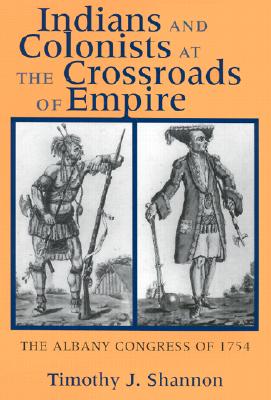
Indians and Colonists at the Crossroads of Empire
| AUTHOR | Shannon, Timothy J. |
| PUBLISHER | Cornell University Press (11/15/2002) |
| PRODUCT TYPE | Paperback (Paperback) |
On the eve of the Seven Years' War in North America, the British crown convened the Albany Congress, an Anglo-Iroquois treaty conference, in response to a crisis that threatened imperial expansion. British authorities hoped to address the impending collapse of Indian trade and diplomacy in the northern colonies, a problem exacerbated by uncooperative, resistant colonial governments. In the first book on the subject in more than forty-five years, Timothy J. Shannon definitively rewrites the historical record on the Albany Congress. Challenging the received wisdom that has equated the Congress and the plan of colonial union it produced with the origins of American independence, Shannon demonstrates conclusively the Congress's importance in the wider context of Britain's eighteenth-century Atlantic empire. In the process, the author poses a formidable challenge to the Iroquois Influence Thesis. The Six Nations, he writes, had nothing to do with the drafting of the Albany Plan, which borrowed its model of constitutional union not from the Iroquois but from the colonial delegates' British cousins.Far from serving as a dress rehearsal for the Constitutional Convention, the Albany Congress marked, for colonists and Iroquois alike, a passage from an independent, commercial pattern of intercultural relations to a hierarchical, bureaucratic imperialism wielded by a distant authority.
On the eve of the Seven Years' War in North America, the British crown convened the Albany Congress, an Anglo-Iroquois treaty conference, in response to a crisis that threatened imperial expansion. British authorities hoped to address the impending collapse of Indian trade and diplomacy in the northern colonies, a problem exacerbated by uncooperative, resistant colonial governments. In the first book on the subject in more than forty-five years, Timothy J. Shannon definitively rewrites the historical record on the Albany Congress. Challenging the received wisdom that has equated the Congress and the plan of colonial union it produced with the origins of American independence, Shannon demonstrates conclusively the Congress's importance in the wider context of Britain's eighteenth-century Atlantic empire. In the process, the author poses a formidable challenge to the Iroquois Influence Thesis. The Six Nations, he writes, had nothing to do with the drafting of the Albany Plan, which borrowed its model of constitutional union not from the Iroquois but from the colonial delegates' British cousins.Far from serving as a dress rehearsal for the Constitutional Convention, the Albany Congress marked, for colonists and Iroquois alike, a passage from an independent, commercial pattern of intercultural relations to a hierarchical, bureaucratic imperialism wielded by a distant authority.