
Back to Search

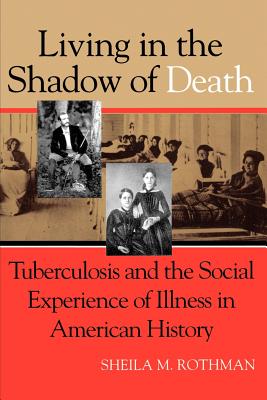
Living Shadow Death Tuberculosis

AUTHOR Rothman, Sheila M.
PUBLISHER Johns Hopkins University Press (10/01/1995)
PRODUCT TYPE Paperback (Paperback)

Description

Tuberculosis--once the cause of as many as one in five deaths in the U.S.--crossed all boundaries of class and gender, but the methods of treatment for men and women differed radically. While men were encouraged to go out to sea or to the open country, women were expected to stay at home, surrounded by family, to anticipate a lingering death. Several women, however, chose rather to head for the drier climates of the West and build new lives on their own. But with the discovery of the tubercle bacillus in 1882 and the establishment of sanatoriums, both men and women were relegated to lives of seclusion, sacrificing autonomy for the prospect of a cure.

In Living in the Shadow of Death Sheila Rothman presents the story of tuberculosis from the perspective of those who suffered, and in doing so helps us to understand the human side of the disease--and to cope with its resurgence. The letters, diaries, and journals piece together what it was like to experience tuberculosis, and eloquently reveal the tenacity and resolve with which people faced it.

Show More
Product Format
Product Details
ISBN-13: 9780801851865
ISBN-10: 0801851866
Binding: Paperback or Softback (Trade Paperback (Us))
Content Language: English
More Product Details
Page Count: 332
Carton Quantity: 24
Product Dimensions: 6.12 x 1.00 x 9.20 inches
Weight: 1.10 pound(s)
Feature Codes: Bibliography, Index, Price on Product, Table of Contents
Country of Origin: US
Subject Information
BISAC Categories
Medical | History
Medical | United States - General
Medical | Social History
Grade Level: College Freshman and up
Dewey Decimal: 616.995
Library of Congress Control Number: 95019372
Descriptions, Reviews, Etc.
annotation
For more than 150 years, until well into the 20th century, tuberculosis was the dreaded scourge that AIDS is for us today. Based on the diaries and letters of hundreds of individuals over five generations, "Living in the Shadow of Death" presents an intimate and evocative portrait of what it was like for patients as well as families and communities to struggle against this dreaded disease.
Show More
jacket back
For more than 150 years, until well into the twentieth century, tuberculosis was the dreaded scourge that AIDS is for us today. Based on the diaries and letters of hundreds of individuals over five generations, Living in the Shadow of Death is the first book to present an intimate and evocative portrait of what it was like for patients as well as families and communities to struggle against this dreaded disease. "Consumption", as it used to be called, is one of the oldest known diseases. But it wasn't until the beginning of the nineteenth century that it became pervasive and feared in the United States, the cause of one out of every five deaths. Consumption crossed all boundaries of geography and social class. How did people afflicted with the disease deal with their fate? How did their families? What did it mean for the community when consumption affected almost every family and every town? Sheila M. Rothman documents a fascinating story. Each generation had its own special view of the origins, transmission, and therapy for the disease, definitions that reflected not only medical knowledge but views on gender obligations, religious beliefs, and community responsibilities. In general, Rothman points out, tenacity and resolve, not passivity or resignation, marked people's response to illness and to their physicians. Convinced that the outdoor life was better for their health, young men with tuberculosis in the nineteenth century interrupted their college studies and careers to go to sea or to settle in the West, in the process shaping communities in Colorado, Arizona, and California. Women, anticipating the worst, raised their children to be welcomed as orphans in other people's homes.In the twentieth century, both men and women entered sanatoriums, sacrificing autonomy for the prospect of a cure. Poignant as biography, illuminating as social history, this book reminds us that ours is not the first generation to cope with the death of the young or with the stigma of disease and the proper limits of medical authority. In an era when a deadly contagious disease once again casts its shadow over individual lives and communities, Living in the Shadow of Death gives us a new sense of our own past as it equips us to comprehend the present.
Show More
publisher marketing

Tuberculosis--once the cause of as many as one in five deaths in the U.S.--crossed all boundaries of class and gender, but the methods of treatment for men and women differed radically. While men were encouraged to go out to sea or to the open country, women were expected to stay at home, surrounded by family, to anticipate a lingering death. Several women, however, chose rather to head for the drier climates of the West and build new lives on their own. But with the discovery of the tubercle bacillus in 1882 and the establishment of sanatoriums, both men and women were relegated to lives of seclusion, sacrificing autonomy for the prospect of a cure.

In Living in the Shadow of Death Sheila Rothman presents the story of tuberculosis from the perspective of those who suffered, and in doing so helps us to understand the human side of the disease--and to cope with its resurgence. The letters, diaries, and journals piece together what it was like to experience tuberculosis, and eloquently reveal the tenacity and resolve with which people faced it.

Show More

Author: Rothman, Sheila M.
Sheila M. Rothman is professor of public health in the Division of Sociomedical Sciences at Columbia University. Her books include "Woman's Proper Place: A History of Changing Ideals and Practices, 1870 to the Present", and "Living in the Shadow of Death: Tuberculosis and the Experience of Illness in American History".
Show More
List Price $35.00
Your Price  $34.65
Paperback