
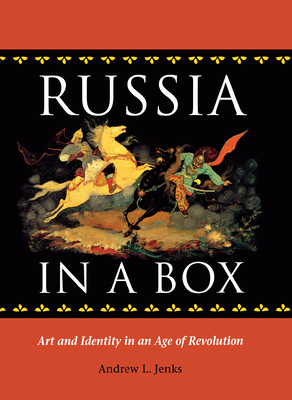
Russia in a Box
| AUTHOR | Jenks, Andrew L. |
| PUBLISHER | Northern Illinois University Press (07/12/2005) |
| PRODUCT TYPE | Hardcover (Hardcover) |
What did it mean to be Russian as the imperial era gave way to Soviet rule? Andrew Jenks turns to a unique art form produced in the village of Palekh to investigate how artists and craftsmen helped to reshape Russian national identity. Russia in a Box follows the development of Palekh art over two centuries as it adapted to dramatic changes in the Russian nation.
As early as the sixteenth century, the peasant "masters" of Palekh painted religious icons. It was not until Russia's victory over Napoleon in 1814, however, that the village gained widespread recognition for its artistic contributions. That same year, the poet Goethe's discovery of the works of Palekh artists and craftsmen spurred interest in preserving the sacred art. The religious icons produced by Palekh masters in the nineteenth century became a source of Russian national pride.
By the 1880s, some artists began to foresee their future as secular artists--a trend that was ensured by the Bolshevik Revolution. Tolerated and sometimes even encouraged by the new regime, the Palekh artists began to create finely decorated lacquered boxes that portray themes from fairy tales and idealized Russian history in exquisite miniatures. A new medium with new subject matter, these lacquered boxes became a new symbol of Russian identity during the 1920s.
Palekh art endured varying levels of acceptance, denial, state control, and reliance on market-driven forces. What began as the art form of religious iconic painting, enduring for more than two centuries, was abruptly changed by the revolutionaries. Throughout the twentieth century the fate of Palekh art remained in question as Russia's political and cultural entities struggled for dominance. Ultimately capitalism and the Palekhian masters were victorious, and the famed lacquer boxes continue to be a source of Russian identity and pride.
What did it mean to be Russian as the imperial era gave way to Soviet rule? Andrew Jenks turns to a unique art form produced in the village of Palekh to investigate how artists and craftsmen helped to reshape Russian national identity. Russia in a Box follows the development of Palekh art over two centuries as it adapted to dramatic changes in the Russian nation.
As early as the sixteenth century, the peasant "masters" of Palekh painted religious icons. It was not until Russia's victory over Napoleon in 1814, however, that the village gained widespread recognition for its artistic contributions. That same year, the poet Goethe's discovery of the works of Palekh artists and craftsmen spurred interest in preserving the sacred art. The religious icons produced by Palekh masters in the nineteenth century became a source of Russian national pride.
By the 1880s, some artists began to foresee their future as secular artists--a trend that was ensured by the Bolshevik Revolution. Tolerated and sometimes even encouraged by the new regime, the Palekh artists began to create finely decorated lacquered boxes that portray themes from fairy tales and idealized Russian history in exquisite miniatures. A new medium with new subject matter, these lacquered boxes became a new symbol of Russian identity during the 1920s.
Palekh art endured varying levels of acceptance, denial, state control, and reliance on market-driven forces. What began as the art form of religious iconic painting, enduring for more than two centuries, was abruptly changed by the revolutionaries. Throughout the twentieth century the fate of Palekh art remained in question as Russia's political and cultural entities struggled for dominance. Ultimately capitalism and the Palekhian masters were victorious, and the famed lacquer boxes continue to be a source of Russian identity and pride.