
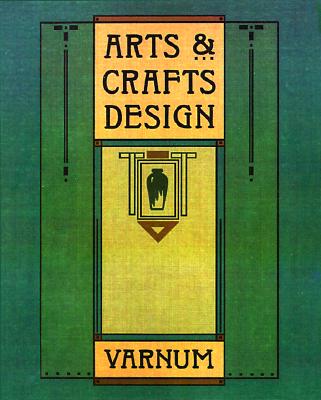
Arts & Crafts Design
| AUTHOR | Hansen, Timothy L.; Hansen, Timothy L.; Varnum, William Harrison et al. |
| PUBLISHER | Gibbs Smith (08/01/1995) |
| PRODUCT TYPE | Paperback (Paperback) |
Originally published in 1916 when the Arts & Crafts movement was in its heyday, this is a virtual textbook of materials, color, techniques, and designs. Arts & Crafts Design is a practical guide to the creation of high-quality, high-style furnishings through the industrial arts.
"In this relativistic age in which de gustilrie non disputandum est (it is undisputed that each person has their own sense of taste), it is refreshing to look back to the early twentieth century when at least a few people were certain that there are universal rules for good art and also that they had themselves mastered these precepts and could pass them on to a society that loved commonly held values. William H. Varnum was one of those people. He offers here a textbook that will, if followed, allow students to 'directly apply well-recognized principles of design to specific materials and problems.' No situation esthetics here. In fact, he followed these principles in designing the logos representing his tools and ratio system on the cover of his book.
"The publisher of this new edition has added a useful foreword and substitued the title Arts and Crafts Design for the original (1916) Industrial Arts Design, an appropriate modification since the term "industrial" suggests factory production whereas Varnum referred to objects that today we call "Craftsman"--Rookwood pottery, Stickley furniture, Jarvie candlesticks, etc. A delightful touch is that Varnum included pictures of these objects alongside the principles by which he believed they were designed. Varnum's book offers an enlightening, if somewhat technical, insight into thinking about design before World War I. There is no doubt that the Arts and Crafts period during which the principles of simple beauty married so neatly with function can be better understood and appreciated today through Varnum's perceptions."
Robert Winter
"In this relativistic age in which de gustilrie non disputandum est (it is undisputed that each person has their own sense of taste), it is refreshing to look back to the early twentieth century when at least a few people were certains that there are universal rules for good art and also that they had themselves mastered these precepts and could pass them on to a society that loved commonly held values. William H. Varnum was one of those people. He offers here a textbook that will, if followed, allow students to 'directly apply well-recognized principles of design to specific materials and problems.' No situation esthetics here. In fact, he followed these principles in designing the logos representing his tools and ratio system on the cover of his book.
"The publisher of this new edition has added a useful foreword and substitued the title Arts and Crafts Design for the original (1916) Industrial Arts Design, an appropriate modification since the term "industrial" suggests factory production whereas Varnum referred to objects that today we call "Craftsman"--Rookwood pottery, Stickley furniture, Jarvie candlesticks, etc. A delightful touch is that Varnum included pictures of these objects alongside the principles by which he believed they were designed. Varnum's book offers an enlightening, if somewhat technical, insight into thinking about design before World War I. There is no doubt that the Arts and Crafts period during which the principles of simple beauty married so neatly with function can be better understood and appreciated today through Varnum's perceptions."
Robert Winter
Originally published in 1916 when the Arts & Crafts movement was in its heyday, this is a virtual textbook of materials, color, techniques, and designs. Arts & Crafts Design is a practical guide to the creation of high-quality, high-style furnishings through the industrial arts.
"In this relativistic age in which de gustilrie non disputandum est (it is undisputed that each person has their own sense of taste), it is refreshing to look back to the early twentieth century when at least a few people were certain that there are universal rules for good art and also that they had themselves mastered these precepts and could pass them on to a society that loved commonly held values. William H. Varnum was one of those people. He offers here a textbook that will, if followed, allow students to 'directly apply well-recognized principles of design to specific materials and problems.' No situation esthetics here. In fact, he followed these principles in designing the logos representing his tools and ratio system on the cover of his book.
"The publisher of this new edition has added a useful foreword and substitued the title Arts and Crafts Design for the original (1916) Industrial Arts Design, an appropriate modification since the term "industrial" suggests factory production whereas Varnum referred to objects that today we call "Craftsman"--Rookwood pottery, Stickley furniture, Jarvie candlesticks, etc. A delightful touch is that Varnum included pictures of these objects alongside the principles by which he believed they were designed. Varnum's book offers an enlightening, if somewhat technical, insight into thinking about design before World War I. There is no doubt that the Arts and Crafts period during which the principles of simple beauty married so neatly with function can be better understood and appreciated today through Varnum's perceptions."
Robert Winter