
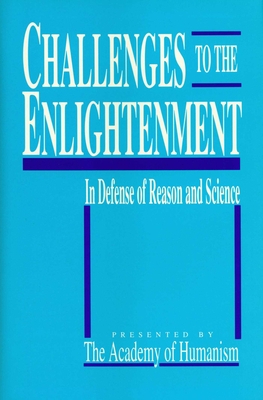
Challenges to the Enlightenment
| AUTHOR | Academy of Humanism |
| PUBLISHER | Prometheus Books (02/01/1994) |
| PRODUCT TYPE | Hardcover (Hardcover) |
Description
The Enlightenment was an intellectual movement which began in seventeenth century Europe and espoused an optimistic project: an end to human ignorance and the slavish adherence to ancient text and dogma; the application of scientific principles to solving the world's problems; the elimination of inequality between the sexes; and the advocacy of political rights for all citizens. Modern western society, with its democratic institutions and its reliance on science as the basis of technology and industry, is largely an outgrowth of Enlightenment ideals.Yet today the entire Enlightenment agenda is being challenged, not only by members of religious orthodoxy but also by a group of academics loosely described under the label of "postmodernism." Whereas the Enlightenment project has always been at odds with religious orthodoxy, which has traditionally been suspicious of efforts to achieve human progress without supernatural support, today it must deal with a very different type of attack from postmodernist intellectuals. Critics of this school question the very ability of human reason to grasp objective reality, and they raise serious objections to the reliability and efficiency of the scientific method and the "tyranny of democratic elites."Is the Enlightenment project still worth pursuing? The distinquished members of the Academy of Humanism who have contributed to this volume are united in their conviction that the ideals of the Enlightenment must be preserved.The contributors include: Elena Bonner, Vern Bullough, Mario Bunge, Bernard Crick, Richard Dawkins, Jose M.R. Delgado, Ann Druyan, Antony Flew, Yves Galifret, Adolf Grunbaum, Paul Kurtz, Thelma Lavine, Jose Leite Lopes, Indumati Parikh, John Passmore, Jean-Claude Pecker, Karl Popper, Richard Rorty, Mourad Wahba, George A. Wells, and Edward O. Wilson.
Show More
Product Format
Product Details
ISBN-13:
9780879758691
ISBN-10:
0879758694
Binding:
Hardback or Cased Book (Sewn)
Content Language:
English
More Product Details
Page Count:
319
Carton Quantity:
20
Product Dimensions:
6.33 x 1.25 x 9.31 inches
Weight:
1.41 pound(s)
Country of Origin:
US
Subject Information
BISAC Categories
Science | Philosophy & Social Aspects
Science | Mind & Body
Dewey Decimal:
501
Library of Congress Control Number:
93041680
Descriptions, Reviews, Etc.
jacket back
The Enlightenment was an intellectual movement which began in seventeenth-century Europe and espoused an optimistic project: an end to human ignorance and the slavish adherence to ancient texts and dogma; the application of scientific principles to solving the world's problems; the elimination of inequality between the sexes; and the advocacy of political rights for all citizens. Modern western society, with its democratic institutions and its reliance on science as the basis of technology and industry, is largely an outgrowth of Enlightenment ideals. Yet today the entire Enlightenment agenda is being challenged, not only by members of the religious orthodoxy but also by a group of academics loosely described under the label of "postmodernism". Whereas the Enlightenment project has always been at odds with religious orthodoxy, which has traditionally been suspicious of efforts to achieve human progress without supernatural support, today it must deal with a very different type of attack from postmodernist intellectuals. Critics of this school question the very ability of human reason to grasp objective reality, and they raise serious objections to the reliability and efficiency of the scientific method and the "tyranny of democratic elites". Is the Enlightenment project still worth pursuing? The distinguished members of the Academy of Humanism who have contributed to this important collection of essays are united in their conviction that the ideals of the Enlightenment must be preserved. Editors Paul Kurtz and Timothy J. Madigan have grouped the diverse perspectives represented in this volume into three major sections dealing with philosophical issues, scientific issues, and socialissues. These cogently argued and vigorous responses to traditional and postmodernist criticisms of the Enlightenment make it clear that reason, science, and the political and social ideals of the Enlightenment are indispensable for the welfare and future of our planet.
Show More
publisher marketing
The Enlightenment was an intellectual movement which began in seventeenth century Europe and espoused an optimistic project: an end to human ignorance and the slavish adherence to ancient text and dogma; the application of scientific principles to solving the world's problems; the elimination of inequality between the sexes; and the advocacy of political rights for all citizens. Modern western society, with its democratic institutions and its reliance on science as the basis of technology and industry, is largely an outgrowth of Enlightenment ideals.Yet today the entire Enlightenment agenda is being challenged, not only by members of religious orthodoxy but also by a group of academics loosely described under the label of "postmodernism." Whereas the Enlightenment project has always been at odds with religious orthodoxy, which has traditionally been suspicious of efforts to achieve human progress without supernatural support, today it must deal with a very different type of attack from postmodernist intellectuals. Critics of this school question the very ability of human reason to grasp objective reality, and they raise serious objections to the reliability and efficiency of the scientific method and the "tyranny of democratic elites."Is the Enlightenment project still worth pursuing? The distinquished members of the Academy of Humanism who have contributed to this volume are united in their conviction that the ideals of the Enlightenment must be preserved.The contributors include: Elena Bonner, Vern Bullough, Mario Bunge, Bernard Crick, Richard Dawkins, Jose M.R. Delgado, Ann Druyan, Antony Flew, Yves Galifret, Adolf Grunbaum, Paul Kurtz, Thelma Lavine, Jose Leite Lopes, Indumati Parikh, John Passmore, Jean-Claude Pecker, Karl Popper, Richard Rorty, Mourad Wahba, George A. Wells, and Edward O. Wilson.
Show More
List Price $39.99
Your Price
$39.59