
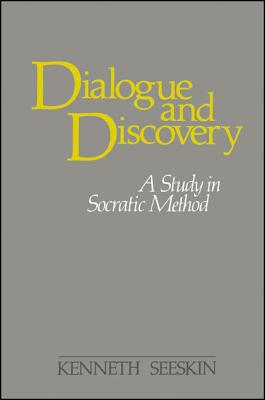
Dialogue and Discovery: A Study in Socratic Method
| AUTHOR | Seeskin, Kenneth |
| PUBLISHER | State University of New York Press (01/02/1987) |
| PRODUCT TYPE | Hardcover (Hardcover) |
This book examines the Socratic method of elenchus, or refutation. Refutation by its very nature is a conflict, which in the hands of Plato becomes high drama. The continuing conversation in which it occurs is more a test of character than of intellect. Dialogue and Discovery shows that, in his conversations, Socrates seeks to define moral qualities-moral essences-with the goal of improving the soul of the respondent.
Ethics underlies epistemology because the discovery of philosophic truth imposes moral demands on the respondent. The recognition that moral qualities such as honesty, humility, and courage are necessary to successful inquiry is the key to the understanding of the Socratic paradox that virtue is knowledge.
The dialogues receiving the most emphasis are the Apology, Gorgias, Protagoras, and Meno.
This book examines the Socratic method of elenchus, or refutation. Refutation by its very nature is a conflict, which in the hands of Plato becomes high drama. The continuing conversation in which it occurs is more a test of character than of intellect. Dialogue and Discovery shows that, in his conversations, Socrates seeks to define moral qualities-moral essences-with the goal of improving the soul of the respondent.
Ethics underlies epistemology because the discovery of philosophic truth imposes moral demands on the respondent. The recognition that moral qualities such as honesty, humility, and courage are necessary to successful inquiry is the key to the understanding of the Socratic paradox that virtue is knowledge.
The dialogues receiving the most emphasis are the Apology, Gorgias, Protagoras, and Meno.