
ISBN 9780887383199 is out of print and is currently unavailable, alternate formats (if applicable) are shown below.
Available options are listed below:
Available options are listed below:
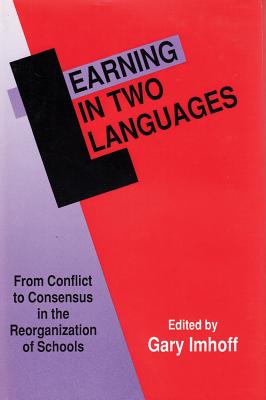
Learning in Two Languages: From Conflict to Consensus in the Reorganization of Schools (Out of print)
| AUTHOR | Imhoff, Gary |
| PUBLISHER | Routledge (01/30/1990) |
| PRODUCT TYPE | Hardcover (Hardcover) |
Description
After being off the public agenda for a decade, the subject of bilingual education is once again at the center of public debate. Assumptions about the values of cultural pluralism and the rise of the "unmeltable ethnics" so dominant for the last twenty years have met a renewed public affirmation of the value of assimilation.In the United States "bilingual education" refers to programs that emphasize students' home languages and culture; teach academic subject matter in students' home languages; and introduce English into the curriculum at a deliberate pace. Students in such programs are generally members of immigrant groups and racial and ethnic minorities, and they usually come from lower-class economic backgrounds.Over the years, a number of different objectives have been advanced for bilingual education programs. In the 1960s and early 1970s, educators believed that these programs should be evaluated by students' linguistic proficiency and progress on standardized tests. More recently, advocates have promoted more subjective measures, such as students' enhanced sense of well-being and self-esteem. And yet others argue that the real goals of bilingual education should be social change and economic redistribution, and that programs should be evaluated by these long-range goals.The conference that gave rise to the essays in this volume was the first national symposium at which advocates and critics of bilingual education confronted each other's arguments face-to-face. These essays address the objectives by which bilingual education should be evaluated; the administrative practices by which programs are run; and the latest research findings on the effectiveness of bilingual education. Authors include Henry Trueba, Rudolph Troike, James Banks, Joshua Fishman, and Christine Rossell.Learning in Two Languages will interest educators and policy researchers, students of ethnic relations, and others concerned about the future direction of U.S. educational policies in this controversial area.
Show More
Product Format
Product Details
ISBN-13:
9780887383199
ISBN-10:
088738319X
Binding:
Hardback or Cased Book (Sewn)
Content Language:
English
More Product Details
Page Count:
328
Carton Quantity:
55
Feature Codes:
Bibliography,
Index,
Illustrated
Country of Origin:
US
Subject Information
BISAC Categories
Education | Bilingual Education
Education | Special Education - General
Dewey Decimal:
371.970
Library of Congress Control Number:
90-31710
Descriptions, Reviews, Etc.
publisher marketing
After being off the public agenda for a decade, the subject of bilingual education is once again at the center of public debate. Assumptions about the values of cultural pluralism and the rise of the "unmeltable ethnics" so dominant for the last twenty years have met a renewed public affirmation of the value of assimilation.In the United States "bilingual education" refers to programs that emphasize students' home languages and culture; teach academic subject matter in students' home languages; and introduce English into the curriculum at a deliberate pace. Students in such programs are generally members of immigrant groups and racial and ethnic minorities, and they usually come from lower-class economic backgrounds.Over the years, a number of different objectives have been advanced for bilingual education programs. In the 1960s and early 1970s, educators believed that these programs should be evaluated by students' linguistic proficiency and progress on standardized tests. More recently, advocates have promoted more subjective measures, such as students' enhanced sense of well-being and self-esteem. And yet others argue that the real goals of bilingual education should be social change and economic redistribution, and that programs should be evaluated by these long-range goals.The conference that gave rise to the essays in this volume was the first national symposium at which advocates and critics of bilingual education confronted each other's arguments face-to-face. These essays address the objectives by which bilingual education should be evaluated; the administrative practices by which programs are run; and the latest research findings on the effectiveness of bilingual education. Authors include Henry Trueba, Rudolph Troike, James Banks, Joshua Fishman, and Christine Rossell.Learning in Two Languages will interest educators and policy researchers, students of ethnic relations, and others concerned about the future direction of U.S. educational policies in this controversial area.
Show More
Author:
Imhoff, Gary
Gary Imhoffis the author of "The Immigration Time Bomb: The Fragmenting of America "and of several articles on bilingual education, and has been an expert consultant to the Department of Education's Office of Bilingual Education.
Show More
Your Price
$158.40